Ugadi Rangoli Designs: Complete Guide for a Bright Festival Floor
Ugadi rangoli designs bring color and welcome to your doorstep on the Telugu and Kannada New Year. This guide covers patterns, colors, materials, and step-by-step methods. You get everything needed to make a beautiful, meaningful floor design at home.
Ugadi rangoli designs are colorful floor patterns drawn during the Ugadi festival to invite prosperity and mark the New Year.
Popular choices include mango leaf motifs, floral circles, and geometric kolam patterns made with rice flour and vibrant colors.
What Are Ugadi Rangoli Designs?
Ugadi rangoli designs are decorative floor art created for the Ugadi festival, celebrated in Andhra Pradesh, Telangana, and Karnataka. The festival marks the start of a new year in the lunar calendar. Families draw these patterns at the entrance to welcome good fortune.
The word Ugadi comes from “Yuga” and “Adi,” meaning the beginning of an era. Rangoli plays a central role in the celebration. It signals joy, freshness, and a clean start for the household.
The festival usually falls in March or April. It arrives with the spring harvest and the first neem blossoms. Rangoli marks this seasonal shift right at the doorstep.
These designs carry deep cultural meaning. Each pattern reflects hope for the year ahead. According to Ugadi tradition documented on Wikipedia, the festival blends spiritual practice with seasonal renewal, and floor art supports that spirit.
The patterns are not just decoration. They act as a daily prayer drawn in powder. The act of bending, drawing, and filling is a form of devotion in itself.
Why Rangoli Matters During Ugadi
Rangoli matters during Ugadi because it welcomes prosperity and honors tradition. The design at your door greets guests and deities alike. It turns an ordinary entrance into a festive space.
I draw rangoli every Ugadi morning after cleaning the threshold. The practice feels grounding. It connects the home to generations of the same ritual.
Fresh patterns also lift the mood of the whole family. Bright colors set a positive tone. The floor becomes the first thing visitors notice.
Popular Ugadi Rangoli Designs to Try
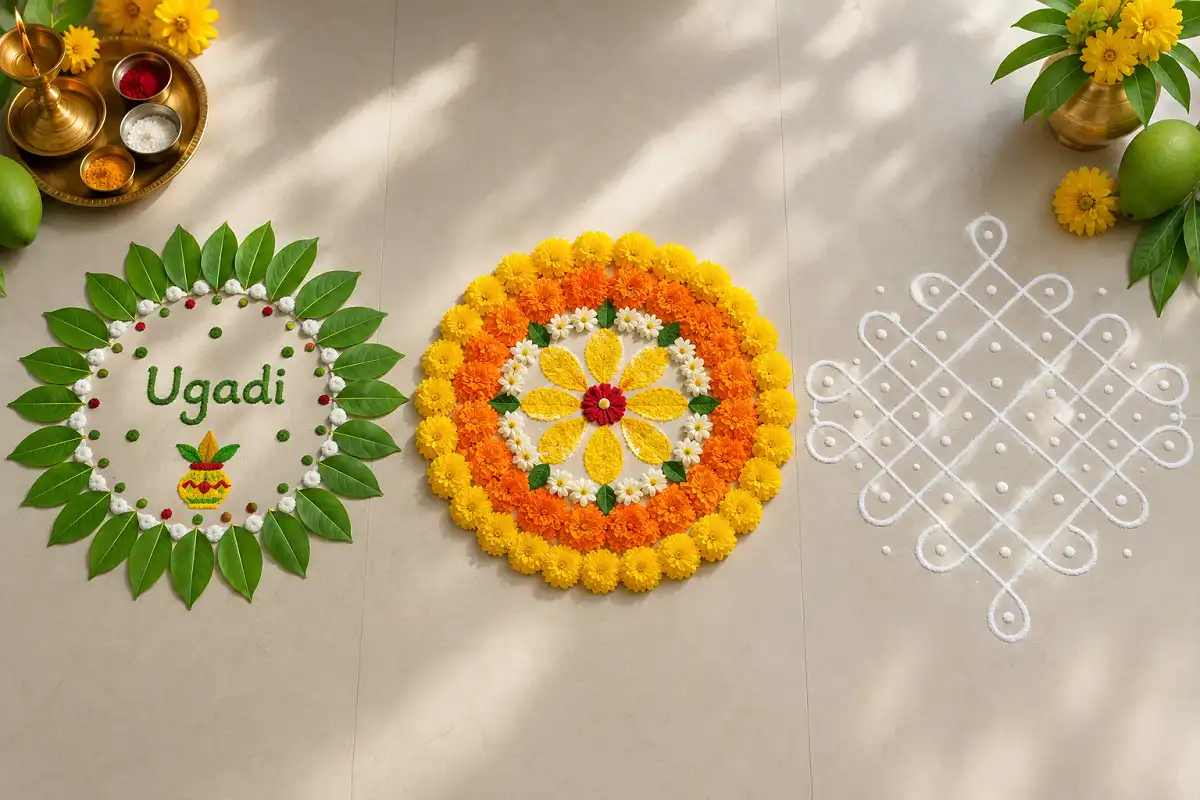
The most popular Ugadi rangoli designs include mango leaf borders, lotus circles, and dotted kolam grids. Each style suits a different skill level. Pick one that matches your time and confidence.
Mango Leaf Rangoli
Green leaf shapes ringed around a centre — a strong, classic Ugadi symbol.
Floral Circle Rangoli
A centre bloom ringed with petals in yellow, orange and pink.
Geometric Kolam
Dots connected by loops and curves for a clean, symmetrical grid.
Mango Leaf Rangoli
Mango leaf rangoli uses green leaf shapes arranged in a ring or arch. Mango leaves are a strong Ugadi symbol. They appear on toranas and doorways across South India during the festival.
Draw a central circle first. Add leaf shapes pointing outward around it. Fill each leaf with green, then outline in white for contrast.
This design links naturally to seasonal freshness. If you want more leaf-based ideas, my guide on floral rangoli patterns for beginners walks through simple shapes step by step.
Floral Circle Rangoli
Floral circle rangoli builds outward from a center bloom. Flowers dominate Ugadi decor. This design mirrors the marigolds and jasmine used in festival garlands.
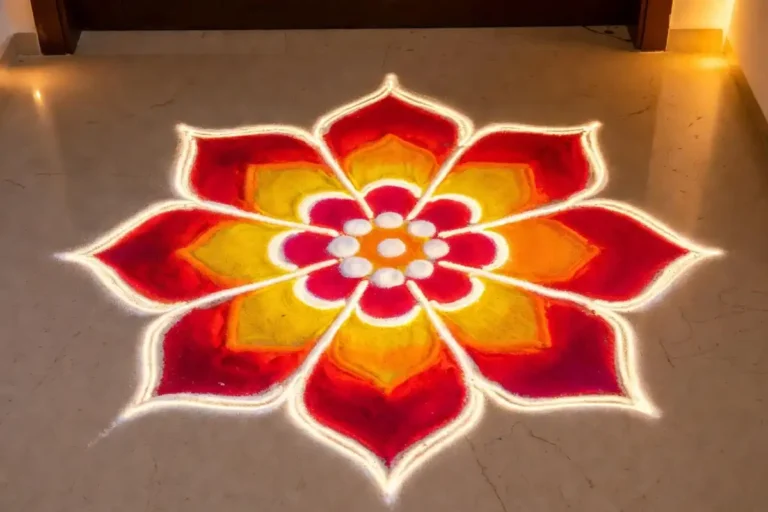
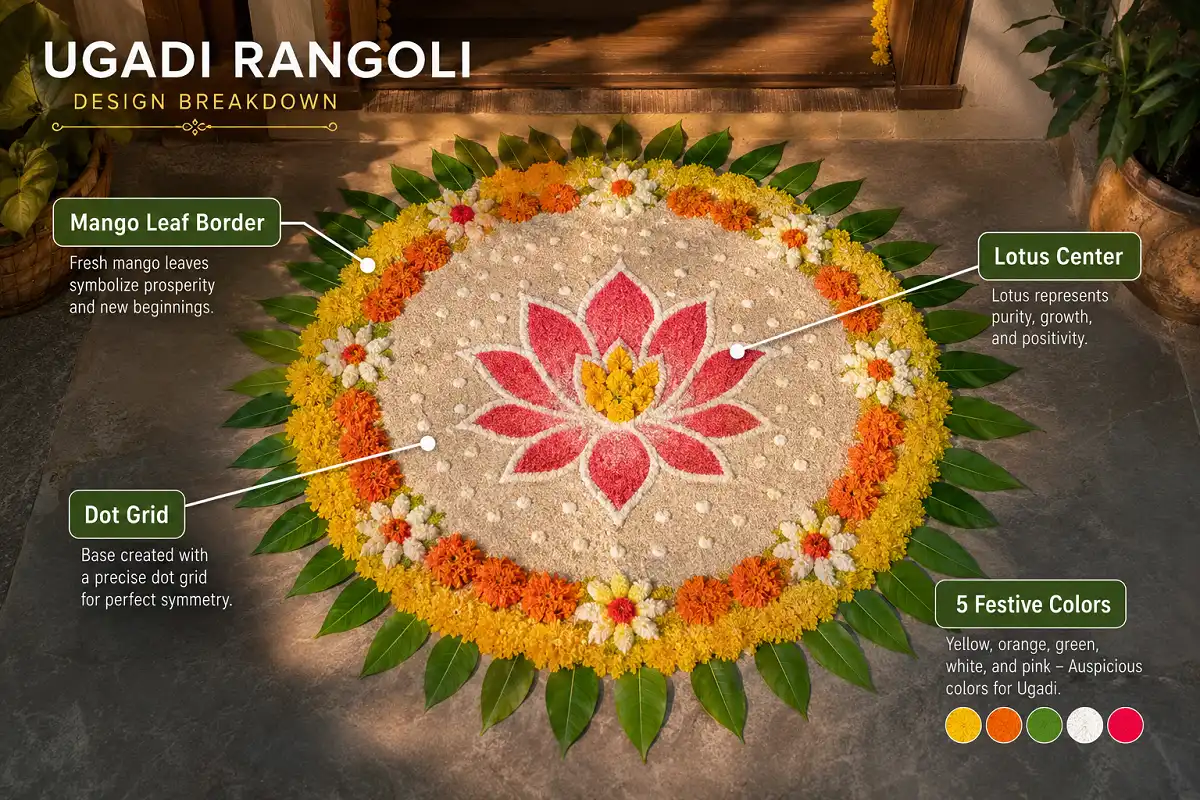
Start with a lotus or marigold at the middle. Ring it with petals in yellow, orange, and pink. Add a border of dots to finish the circle.
Geometric Kolam Patterns
Geometric kolam patterns use dots connected by lines and curves. Kolam is the South Indian form of rangoli. These grids create clean, symmetrical Ugadi rangoli designs that look complex but follow simple rules.
Place a dot grid first. Loop lines around the dots to form the shape. Keep spacing even for a neat result.
Traditional Symbols in Ugadi Rangoli
Traditional symbols in Ugadi rangoli include mango leaves, the lotus, the sun, and the pot of Ugadi Pachadi. Each carries a clear meaning. Adding them gives your design cultural weight beyond simple color.
Mango Leaves
Mango leaves stand for life and prosperity. They tie directly to the torana hung above the door. Drawing them on the floor echoes that welcome.
The Lotus
The lotus stands for purity and new beginnings. It fits the New Year theme without effort. A single lotus at the center anchors many festival patterns.
The Sun Motif
The sun motif marks a fresh day and a fresh year. Rays drawn outward suggest energy and growth. This symbol works well as a border around a central bloom.
Ugadi Pachadi Pot
Some artists include a small pot shape for Ugadi Pachadi, the festival dish. The dish mixes six tastes to represent life’s mix of experiences. A pot motif quietly nods to that idea.
Regional Styles Across South India
Regional styles across South India shape how each family draws for Ugadi. Andhra Pradesh, Telangana, and Karnataka each favor slightly different forms. Knowing them helps you pick an authentic look.
Andhra Pradesh & Telangana
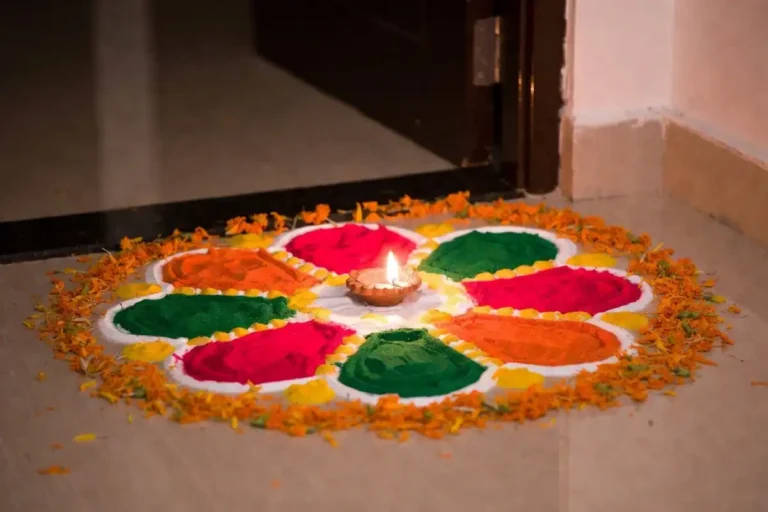
Bold color-filled patterns are common. Families use bright powder across large shapes. The look is vivid and full.
Karnataka
The kolam influence runs strong. Dotted grids and looping lines appear more often. The style leans clean and geometric.
Coastal Areas
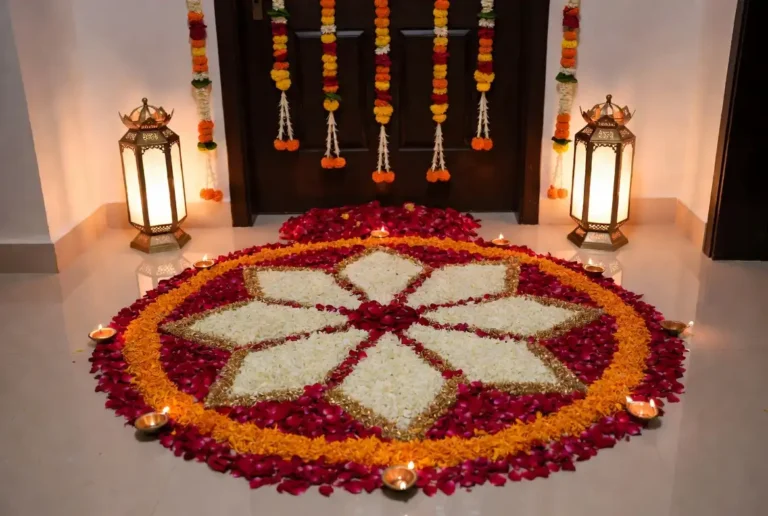
Fresh flower petals are added to the powder base. This mix of dry and fresh material gives texture and fills the entrance with natural scent.
You can blend these styles freely. There is no single correct form. Pick the elements that suit your space and your comfort with the material.
Colors That Suit Ugadi Rangoli Designs
The best colors for Ugadi rangoli designs are yellow, green, orange, red, and white. Yellow stands for happiness. Green represents new growth, which fits the New Year theme perfectly.
Orange and red add warmth and energy. White outlines make every color pop. Together these shades reflect the mood of the festival.
Natural colors work well too. Turmeric gives yellow. Rice flour gives white. Crushed leaves or flower petals add soft, organic tones to your Ugadi rangoli designs.
Materials You Need for Ugadi Rangoli
You need rice flour, colored powders, flower petals, and a steady hand for Ugadi rangoli. Rice flour forms the base outline. Colored powder fills the pattern.
Flower petals add texture and scent. Chalk helps sketch the outline before you commit. A small cone or squeeze bottle gives you control over fine lines.
- Rice flour — base outline
- Colored powders — fills the pattern
- Flower petals — texture and scent
- Chalk — sketch before committing
- Cone or squeeze bottle — fine line control
- A steady hand — the most important tool
For flower-based designs, fresh petals matter. My notes on fresh flower rangoli methods explain which blooms hold color longest and how to arrange them.
How to Make Ugadi Rangoli Designs Step by Step
To make Ugadi rangoli designs, clean the area, sketch the outline, then fill with color. The process takes patience, not talent. Follow these steps in order.
Clean the floor
Sweep and wipe the floor. A clean surface holds powder better. Sprinkle a little water to settle dust.
Mark the centre
Use chalk to draw your basic shape. Keep it light so you can adjust.
Lay the dot grid
If the design needs one, space dots evenly. This grid guides your lines.
Outline in white
Use rice flour or white powder. Steady your hand near the floor. Move slowly for clean edges.
Fill with color
Work from the center outward. This stops you from smudging finished areas.
Add final details
Place petals, add dots, or draw a border. Step back and check the balance.
Simple Ugadi Rangoli Designs for Beginners
Simple Ugadi rangoli designs for beginners use fewer dots and basic shapes. Start small. A single flower with a dotted border builds confidence fast.
Try a four-petal flower inside a circle. Add color in two shades only. Finish with a ring of white dots.
Beginners should practice the outline on paper first. Muscle memory helps. Once the shape feels natural, move to the floor.
Keep your first attempt under one foot wide. Small patterns are forgiving. You can always scale up next year.
Advanced Ugadi Rangoli Designs for Experienced Artists
Advanced Ugadi rangoli designs combine multiple motifs into one large composition. Think mango leaves, lotus, and geometric borders together. These take planning and time.
Sketch the full layout before you begin. Divide the space into zones. Assign a motif to each zone for balance.
Layer colors for depth. Blend shades at the edges. Add fine white detailing last to sharpen the whole piece.
Large compositions reward patience. A detailed floor pattern can take two hours. The result becomes the centerpiece of your entrance.
Where to Place Your Ugadi Rangoli
Place your Ugadi rangoli at the main entrance, in the pooja room, or in the courtyard. The doorway is the traditional spot. It welcomes guests and blessings.
The pooja area suits smaller, sacred patterns. A courtyard gives room for large designs. Pick the spot that fits your home and the design size.
Good placement also means good light. Morning sun makes colors glow. A shaded, protected floor keeps the pattern intact through the day.
Tips to Keep Ugadi Rangoli Designs Lasting Longer
To keep Ugadi rangoli designs lasting longer, work on a dry surface and fix the powder lightly. Damp floors blur the lines. A dry base holds shape.
Mist the finished design with a light water spray. This settles loose powder. Do it gently so colors do not run.
Keep the pattern away from foot traffic and wind. A protected corner lasts longer. Indoor designs survive better than open outdoor ones.
For entrance patterns that face daily wear, my ideas on colorful entrance floor art show layouts built to handle movement and still look sharp.
Common Mistakes to Avoid
Starting without a clean, dry floor. Powder will not hold on dust or damp — this one issue ruins more designs than any other.
Rushing the outline. A shaky base makes every later step harder. Slow, steady lines set up the whole pattern.
Picking too many colors at once. Five shades is plenty — too many colors blur the design and confuse the eye.
Uneven dot spacing in kolam grids. Measure roughly with your fingers as you place dots so gaps stay even.
Filling from the edges inward. This smudges finished sections as you reach across — always work from the center outward.
Tools That Make the Work Easier
A few simple tools make drawing far easier for any skill level. A rangoli cone gives you fine control over thin lines. A small funnel or squeeze bottle speeds up filling large areas.
Rangoli Cone
Stencils help beginners get clean shapes fast. Press it down, dust powder over it, then lift — the outline stays crisp with almost no practice.
Stencils
A soft brush cleans up stray powder at the edges. It sharpens borders in seconds — keep one nearby for quick fixes.
Soft Brush
If you draw often, a set of graded color powders saves time. Pre-mixed shades stay consistent year to year.
Graded Color Powders
Store them dry and sealed between festivals so shades stay bright year after year.
How to Create Beautiful Ugadi Rangoli Designs at Home
Ugadi rangoli designs turn your doorstep into a bright welcome for the New Year. Start with a simple flower or mango leaf pattern, then build skill each year. Clean the floor, sketch first, and fill from the center out.
Remember the core symbols as you draw. Mango leaves, the lotus, and warm festive colors carry the meaning of the day. Even a small pattern with these elements feels complete and authentic.
Give yourself time and do not chase perfection on the first try. Each year your hand grows steadier and your patterns grow bolder. With practice, your festival floor becomes a proud centerpiece that greets prosperity and every guest who visits your home.