Rangoli Easy Design: Beautiful Patterns for Every Home
Rangoli is a beautiful part of Indian culture, and there’s something special about seeing a colorful design brighten up the entrance of a home. The vibrant colors, simple patterns, and traditional feel can instantly make any space look more welcoming and festive.
But if you’ve ever looked at a detailed rangoli outside a neighbor’s house and thought, “I could never make that,” don’t worry you’re definitely not alone. The good news is that rangoli doesn’t have to be complicated. With a few simple rangoli easy design ideas, even beginners can create something beautiful without spending hours practicing.
Whether you’re making rangoli for Diwali, a family celebration, or simply want to add a little color to your home, there are plenty of easy patterns to try. Start with a simple design, enjoy the process, and you’ll soon feel more confident creating your own rangoli.
Why Rangoli Is More Than Just Decoration
Rangoli holds deep cultural meaning in India. It is traditionally created at home entrances to welcome guests, celebrate festivals, and invite good energy. Families across different states have their own style, whether it is called Kolam in Tamil Nadu, Alpana in West Bengal, or Chowkpurana in Uttar Pradesh.
Beyond tradition, making rangoli is a mindful, calming activity. The process of planning a pattern and filling it with color is a creative outlet that anyone can enjoy. You do not need expensive supplies or years of practice to get started. A few basic materials and a willingness to try are all you need.
Getting Started: Tools and Materials
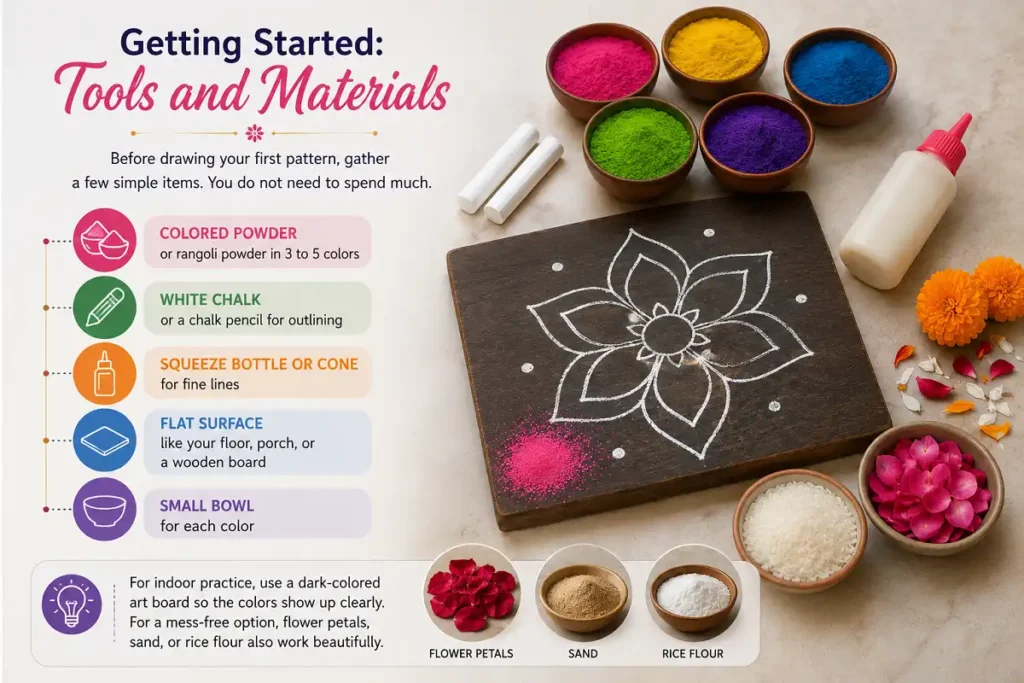
Before drawing your first pattern, gather a few simple items. You do not need to spend much.
- Colored powder or rangoli powder in 3 to 5 colors
- White chalk or a chalk pencil for outlining
- A squeeze bottle or cone for fine lines
- A flat surface like your floor, porch, or a wooden board
- A small bowl for each color
For indoor practice, you can use a dark-colored art board so the colors show up clearly. If you want a mess-free option, flower petals, sand, or rice flour also work beautifully.
Simple Dot Rangoli Easy Design for Beginners
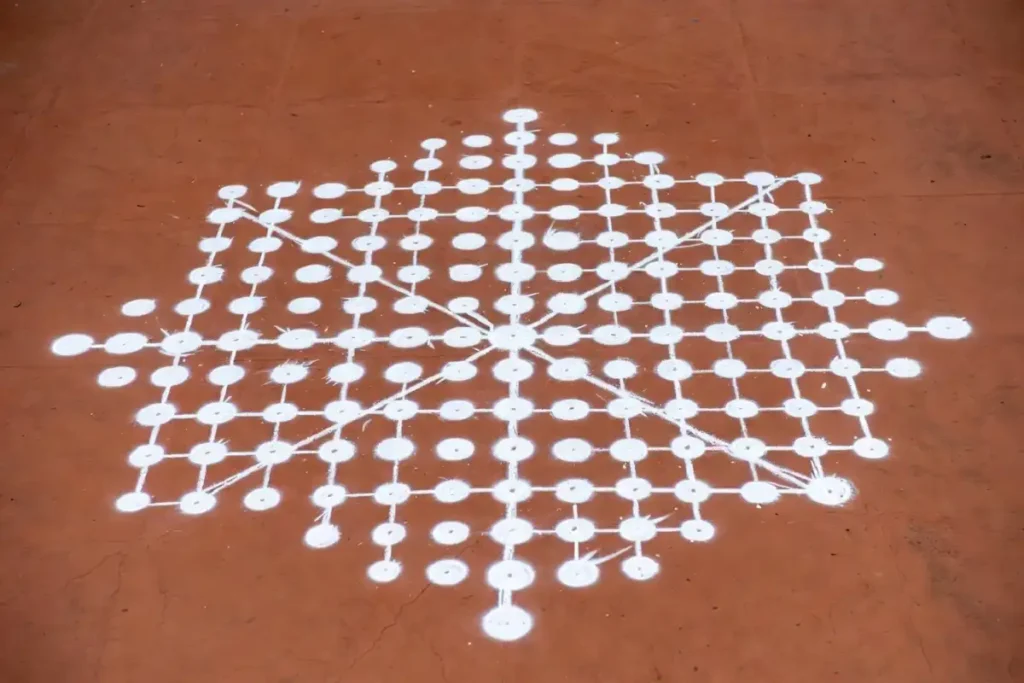
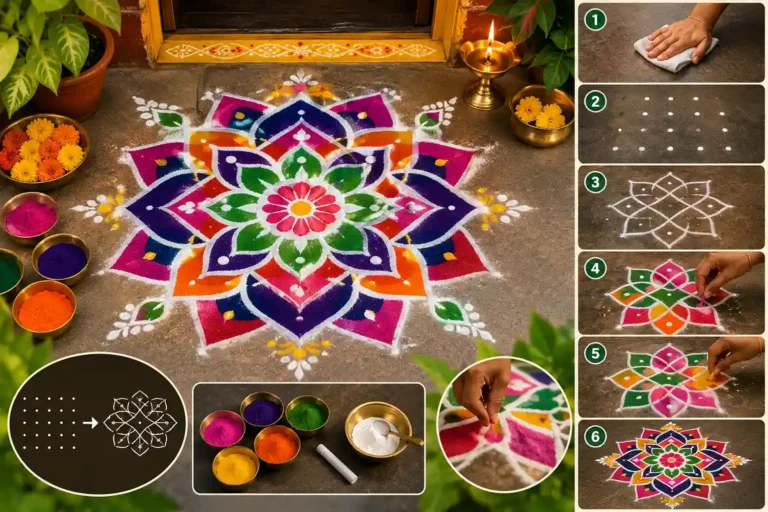
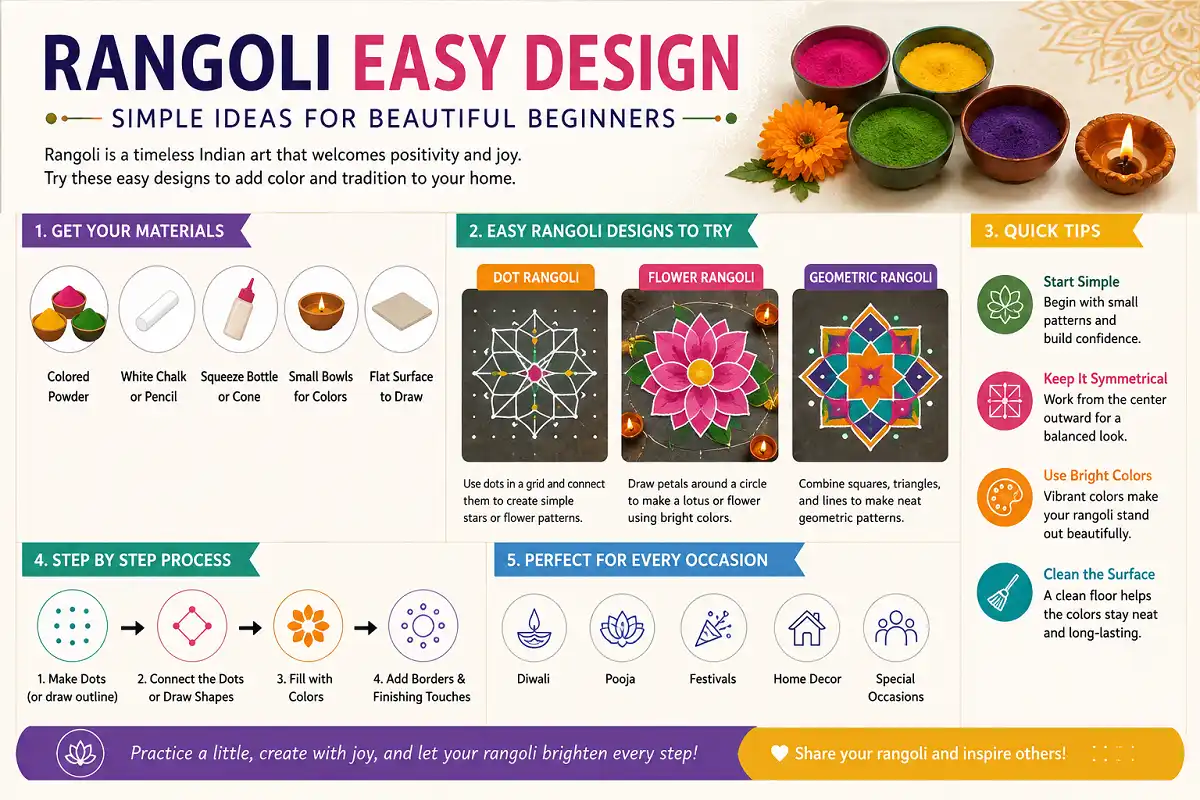
Dot-based rangoli is the best starting point for anyone new to this art. You place dots in a grid pattern first, then connect them to form shapes like stars, diamonds, or petals. This method, common in South Indian Kolam traditions, keeps your design symmetrical without requiring freehand drawing skills.
Here is a simple approach to try:
- Place 5 dots in a row, then reduce by one dot in each following row to form a triangle grid.
- Connect the dots using curved or straight lines to form a star or leaf pattern.
- Fill in each section with a different color.
- Add small dots around the border as a finishing touch.
For more step-by-step guidance, this beginner-friendly resource on rangoli easy design ideas walks you through the whole process clearly.
Flower Rangoli Easy Design That Look Stunning
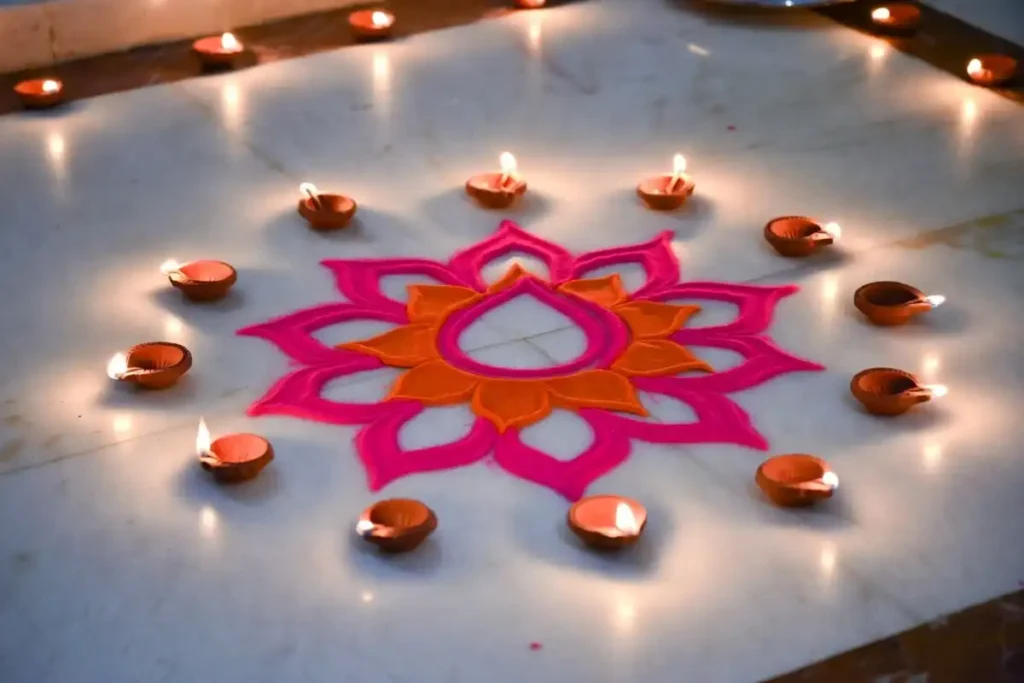
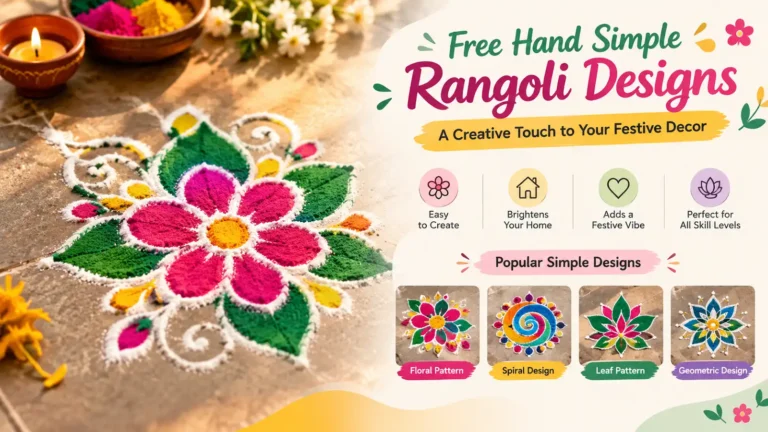
Floral patterns are among the most popular choices for rangoli. They look intricate but are surprisingly simple once you understand the basic petal shape. A lotus is especially meaningful and also one of the easiest flowers to draw in rangoli form.
To make a simple lotus rangoli:
- Draw a small circle in the center of your design space.
- Add six to eight oval petal shapes around the circle, evenly spaced.
- Add a second outer layer of petals between the first ones.
- Use pink or orange for the petals and yellow or gold for the center.
- Outline everything in white for a clean, finished look.
You can explore more ideas on this lotus rangoli Easy design pattern guide which covers step-by-step festival-ready versions.
Flower patterns also work well as smaller corner designs for rooms, pooja spaces, or dinner tables. They do not need to be large to be impressive.
Geometric Rangoli Patterns Made Easy
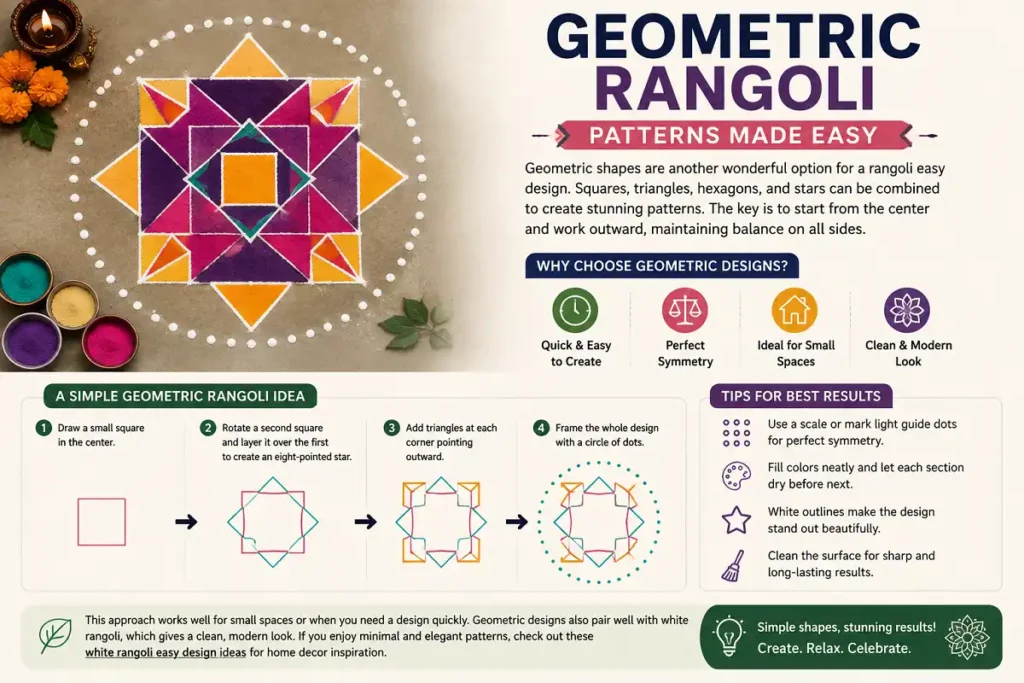
Geometric shapes are another wonderful option for a rangoli easy design. Squares, triangles, hexagons, and stars can be combined to create stunning patterns. The key is to start from the center and work outward, maintaining balance on all sides.
A simple geometric rangoli idea:
- Draw a small square in the center of your space.
- Rotate a second square slightly and layer it over the first to create an eight-pointed star.
- Add triangles at each corner pointing outward.
- Frame the whole design with a circle of dots.
This approach works well for small spaces or when you need a design quickly. Geometric designs also pair well with white rangoli, which gives a clean, modern look. If you enjoy minimal and elegant patterns, check out these white rangoli easy design ideas for home decor inspiration.
Easy Rangoli Design for Festivals and Special Days
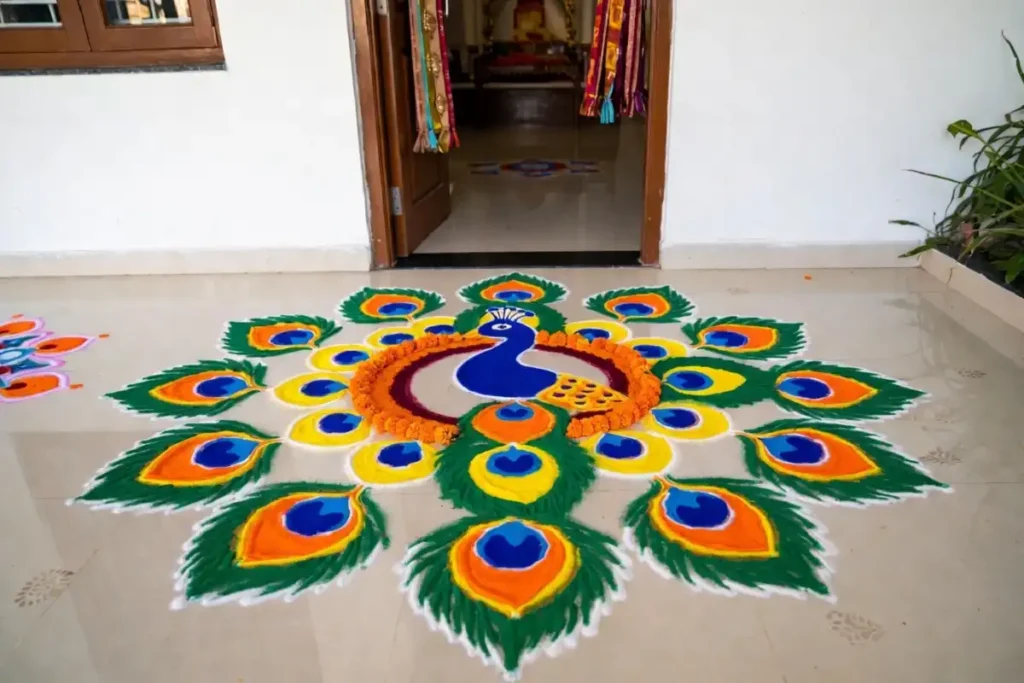
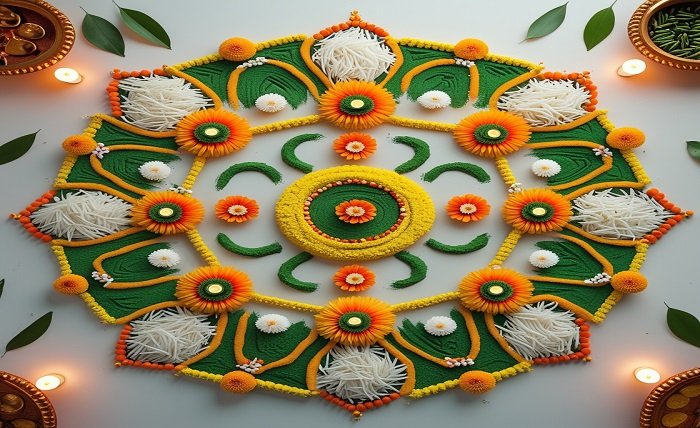
Festival rangoli does not have to be complicated to be meaningful. During Diwali, Pongal, Navratri, or Onam, a simple and colorful design at your entrance sets a festive tone for the whole home.
Some easy festival rangoli themes:
- Diwali: A lamp or diya shape in yellow and orange surrounded by a circular petal border.
- Pongal: Kolam-style patterns with sun rays and dot grids in white rice flour.
- Navratri: Bright concentric circles in nine different colors, one for each day.
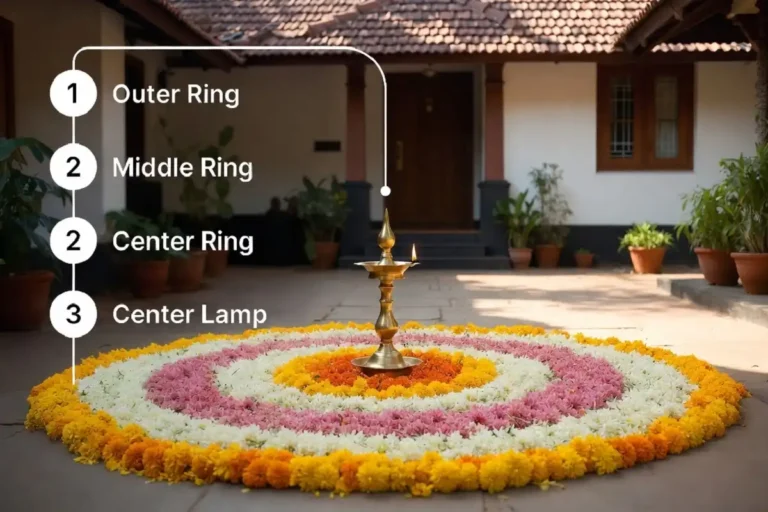
- Onam: Flower carpet (Pookalam) using fresh marigold, chrysanthemum, and other petals arranged in rings.
For festivals, you can also combine your rangoli with small candles, flower petals, or decorative stones around the border to enhance the festive look without adding complexity to the pattern itself.
According to the Smithsonian’s Asian Pacific American Center, floor art traditions like rangoli represent a living cultural practice passed across generations, adapting in style while remaining rooted in meaning.
Tips to Make Your Rangoli Look Neat and Beautiful
Even a simple pattern can look stunning with a little care. A few practical tips help beginners and experienced makers alike.
If your first attempt does not look perfect, that is completely fine. Rangoli is a practice, and each time you draw, you improve naturally.
How to Use Stencils for a Quick Easy Rangoli
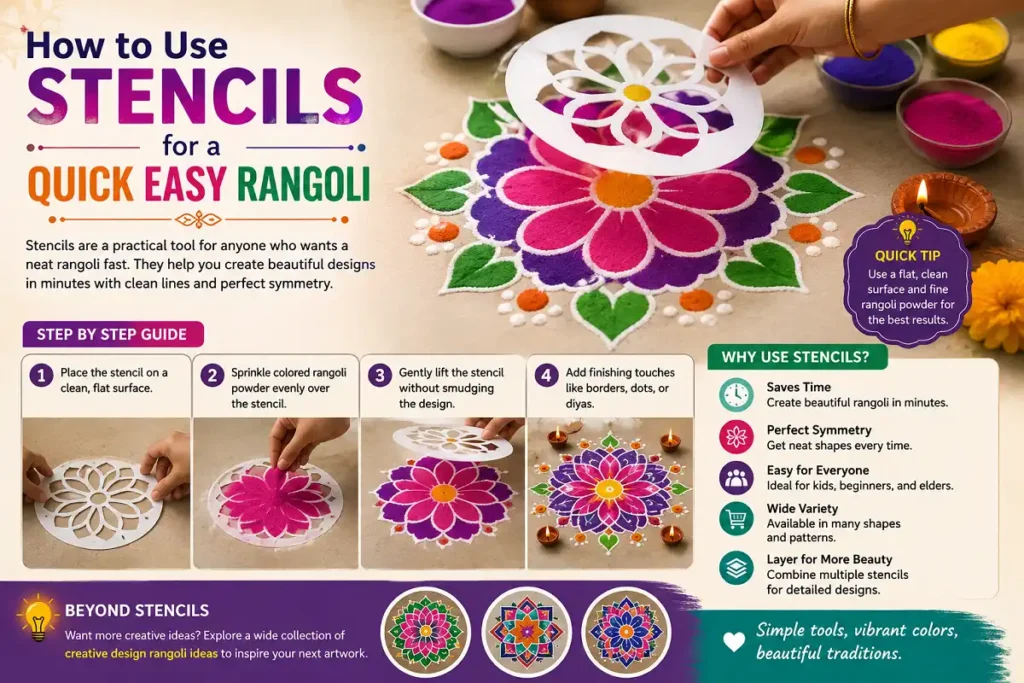
Stencils are a practical tool for anyone who wants a neat rangoli fast. You simply place the stencil on the floor, sprinkle colored powder over it, and lift to reveal a clean design. Stencils are widely available in markets and online in a range of shapes including flowers, mandalas, diyas, and geometric stars.
Using a stencil does not reduce the beauty of the art. It makes rangoli more accessible for children, elderly family members, and anyone who is new to the tradition. You can also layer multiple stencils for a more detailed result.
For those who want to explore more creative ideas beyond stencils, this collection of creative design rangoli ideas offers a wide range of patterns to spark inspiration.
Rangoli with Everyday Materials
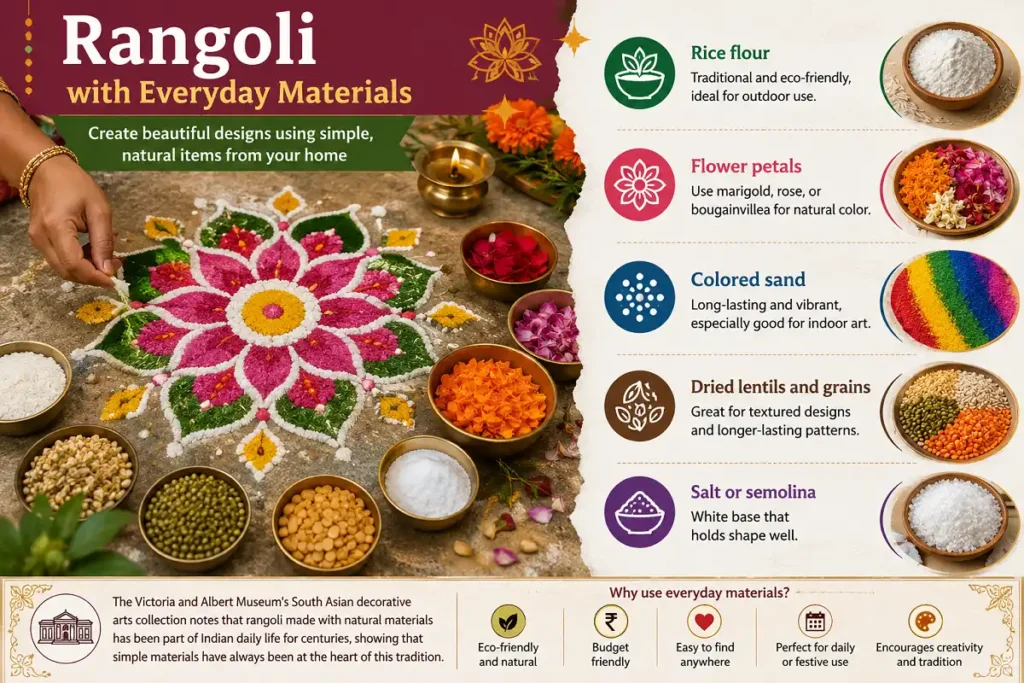
Not everyone has access to rangoli powder, and that is perfectly fine. Some of the most beautiful designs are made with items already in the kitchen or garden.
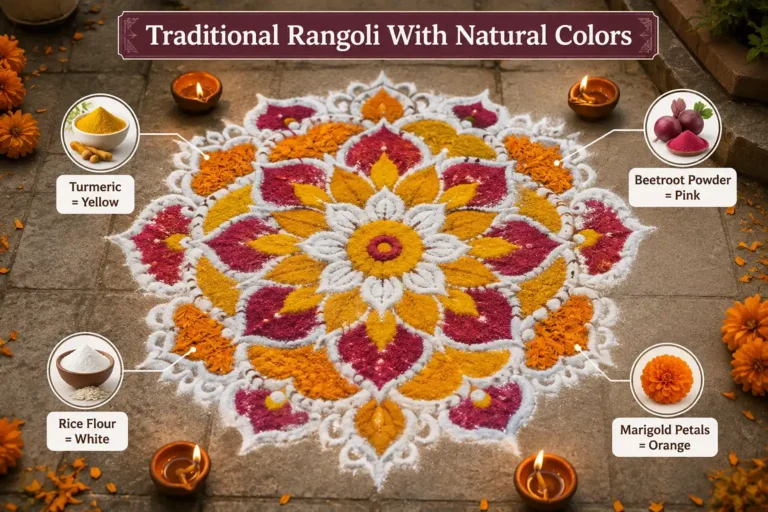
- Rice flour: Traditional and eco-friendly, ideal for outdoor use.
- Flower petals: Use marigold, rose, or bougainvillea for natural color.
- Colored sand: Long-lasting and vibrant, especially good for indoor art.
- Dried lentils and grains: Great for textured designs and longer-lasting patterns.
- Salt or semolina: White base that holds shape well.
The Victoria and Albert Museum’s South Asian decorative arts collection notes that rangoli made with natural materials has been part of Indian daily life for centuries, showing that simple materials have always been at the heart of this tradition.
Start Small and Have Fun
Rangoli easy design ideas make it simple for anyone to enjoy this beautiful Indian art, no matter how much experience they have or what materials are available. From basic dot patterns and pretty flowers to simple geometric shapes, there are plenty of designs to match your space, time, and occasion.
You don’t need to start with a large or complicated pattern. Even a small flower, star, or simple design at your entrance can make your home feel warmer and more festive. As you keep practicing, you’ll naturally become more comfortable and start adding your own creative touches.
Most importantly, rangoli isn’t about making a perfect design. It’s about having fun, being creative, and keeping a beautiful tradition alive. So pick an easy design, grab your colors, and enjoy creating something that makes your home feel a little more special.
Frequently Asked Questions
What is the easiest rangoli easy design for a beginner?
A simple dot grid design is the easiest starting point. Place evenly spaced dots in a grid, then connect them with lines or curves to form a basic star or petal shape. This method requires no freehand drawing and produces a clean, symmetrical result even for first-timers.
How do I make rangoli without powder?
You can make rangoli without powder by using flower petals, rice flour, colored sand, or even dried lentils. Petals are especially popular during Onam and create a natural, fragrant design. Rice flour is a traditional alternative used in South Indian Kolam styles.
Can children make rangoli easily?
Yes, children can take part in rangoli with stencils, petals, or large simple shapes drawn in chalk first. Flower petal rangoli is a great activity for kids as it involves no mess from powder and is easy to guide. Keeping the shape large and the color areas broad makes it manageable for young hands.
How long does a rangoli take to make?
A simple rangoli easy design can take as little as 10 to 15 minutes. More detailed patterns with many colors and sections may take 30 to 60 minutes. Using a stencil reduces time significantly. The more you practice, the faster the process becomes.
How do I keep my rangoli from spreading or smudging?
Work on a dry, clean surface and avoid touching the design once the color is placed. For outdoor rangoli, a very light mist of water can help the powder set. Keeping foot traffic away from the area and using a soft brush for any corrections helps maintain the pattern’s shape.
Is there a specific time to make rangoli?
Traditionally, rangoli is made in the morning as part of daily rituals, especially during festivals. For Diwali or other celebrations, it is drawn the night before or on the morning of the event. There is no strict rule, though, and you can make rangoli any time you want to add color and joy to your space.