Rangoli Designs Passed Down Generations: The Living Art Every Indian Home Keeps Alive
Rangoli designs passed down generations are more than colorful patterns on a floor. They are family traditions made visible — geometric grids, floral motifs, deity impressions, and dotted kolams that mothers, grandmothers, fathers, and neighbors teach to the next generation.
These designs carry personal meaning, spiritual significance, regional identity, and cultural memory. A store-bought stencil can recreate a shape, but it cannot recreate the story behind a pattern that your family has drawn for decades.
You can start your own family tradition with something as simple as a dotted grid, rice flour, and a little patience. The goal isn’t perfection. It’s continuity.
A grain of rice flour may disappear within days, but the pattern can survive for generations because someone remembers how to draw it again.
Rangoli is not only something families make. It is something families remember.
Why a Floor Drawing Outlasts Generations
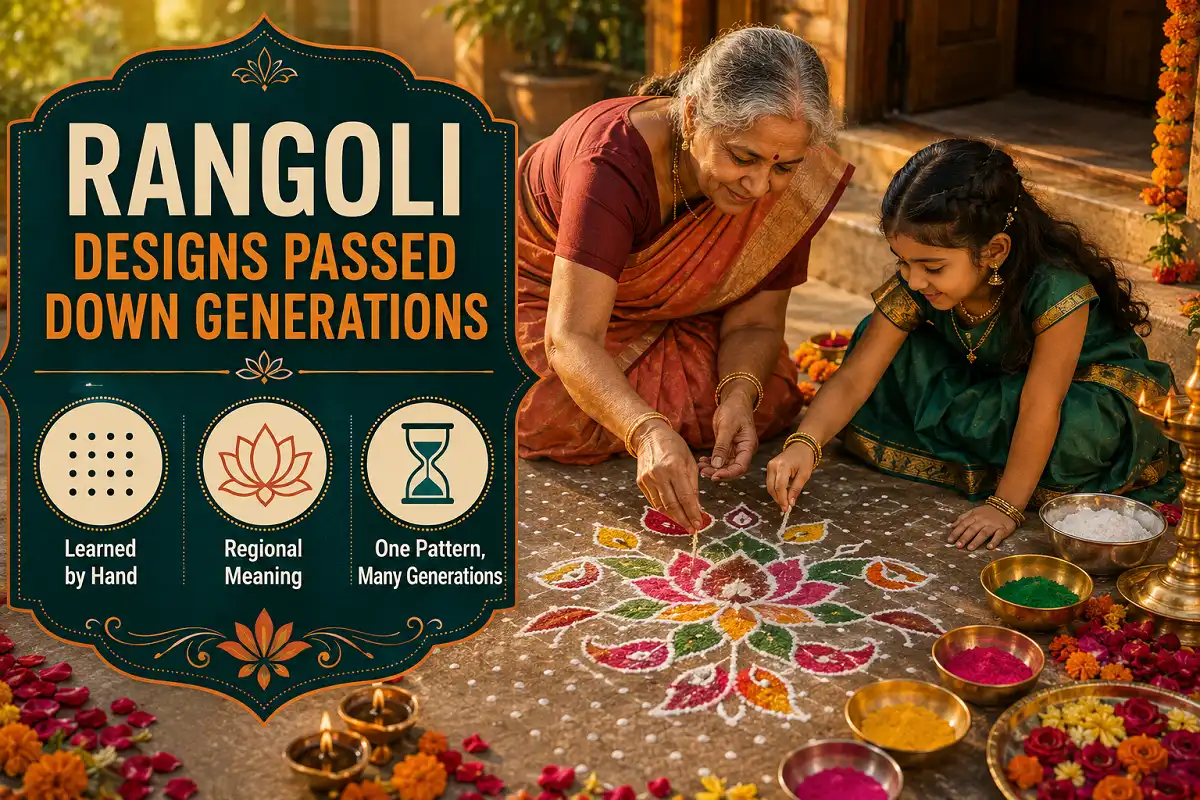
Walk into almost any Indian home during Diwali, Pongal, or Onam, and you may find the same scene repeating itself across decades: someone kneeling at the threshold, fingers dusted with colored powder, carefully recreating a pattern they didn’t invent.
They learned it — usually from a mother, grandmother, aunt, or neighbor who had been drawing it since before they could walk.
That’s the quiet magic behind rangoli designs passed down generations. They aren’t simply decoration. They are a form of visual history, redrawn by hand year after year.
The physical artwork may disappear because of wind, rain, or passing feet, but the knowledge of how to recreate it can remain alive for decades.
This guide explores what inherited rangoli designs actually are, why families continue preserving them, the different styles you may encounter, and how you can begin your own family tradition.
What Exactly Is Rangoli?
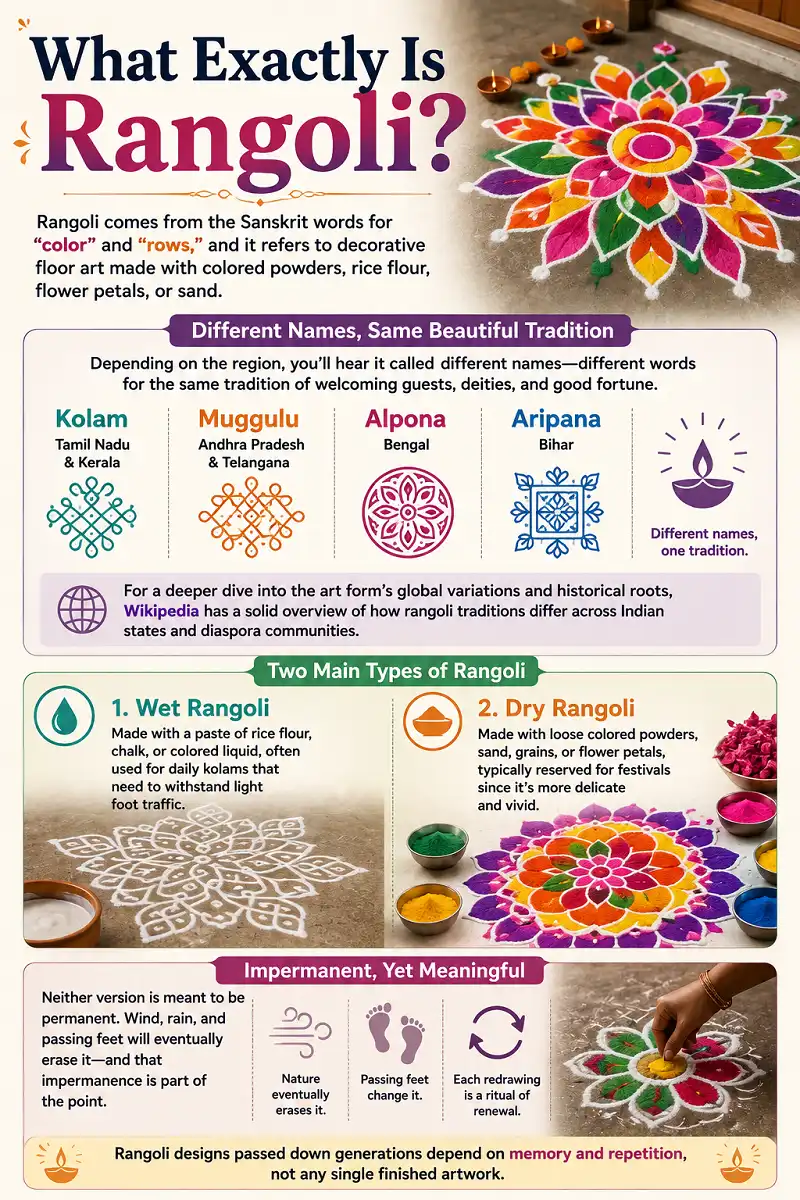
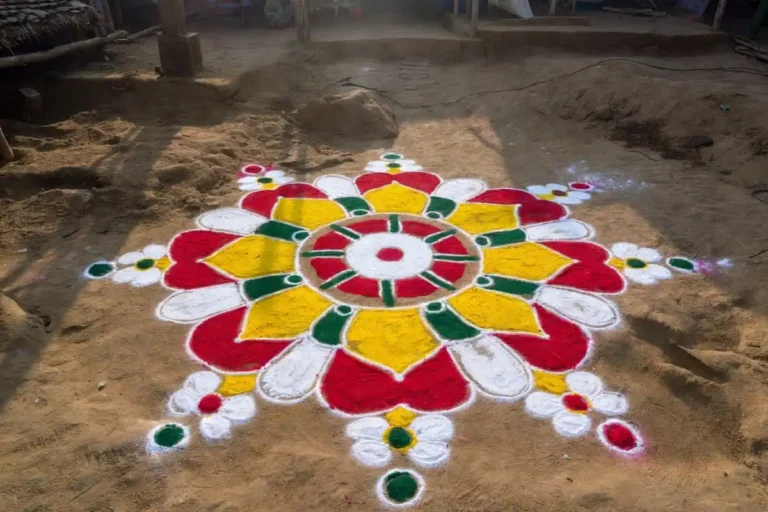
Rangoli refers to decorative floor art made using colored powders, rice flour, flower petals, sand, and other materials.
Depending on the region, you may hear it called kolam in Tamil Nadu and Kerala, muggulu in Andhra Pradesh and Telangana, alpona in Bengal, or aripana in Bihar.
These different names reflect regional traditions built around drawing decorative patterns at the entrance of a home to welcome guests, deities, and good fortune.
For a broader overview of rangoli traditions and their regional variations, you can also explore Wikipedia’s overview of Rangoli .
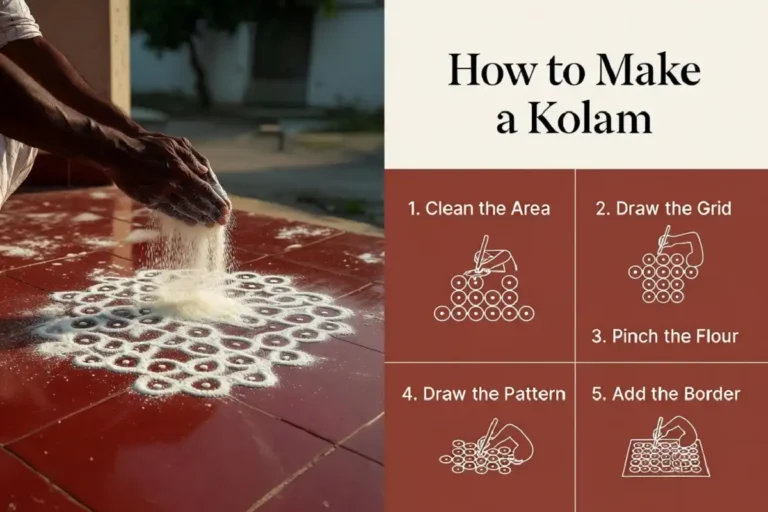
- Wet rangoli — made with a paste of rice flour, chalk, or colored liquid. It is often associated with daily kolam-style drawing.
- Dry rangoli — made with loose colored powders, sand, grains, or flower petals and commonly used for festive decoration.
Neither version is meant to last forever. Wind, rain, and passing feet eventually erase the design. That impermanence is part of the tradition: the artwork disappears, but the knowledge is renewed when someone draws it again.
Why Rangoli Designs Passed Down Generations Still Matter Today
Printed rangoli mats, ready-made stencils, and digital templates have made festive decoration easier. Yet handmade family patterns continue to matter because they offer something a ready-made design cannot: a connection to people and memories.
Personal and Spiritual Meaning
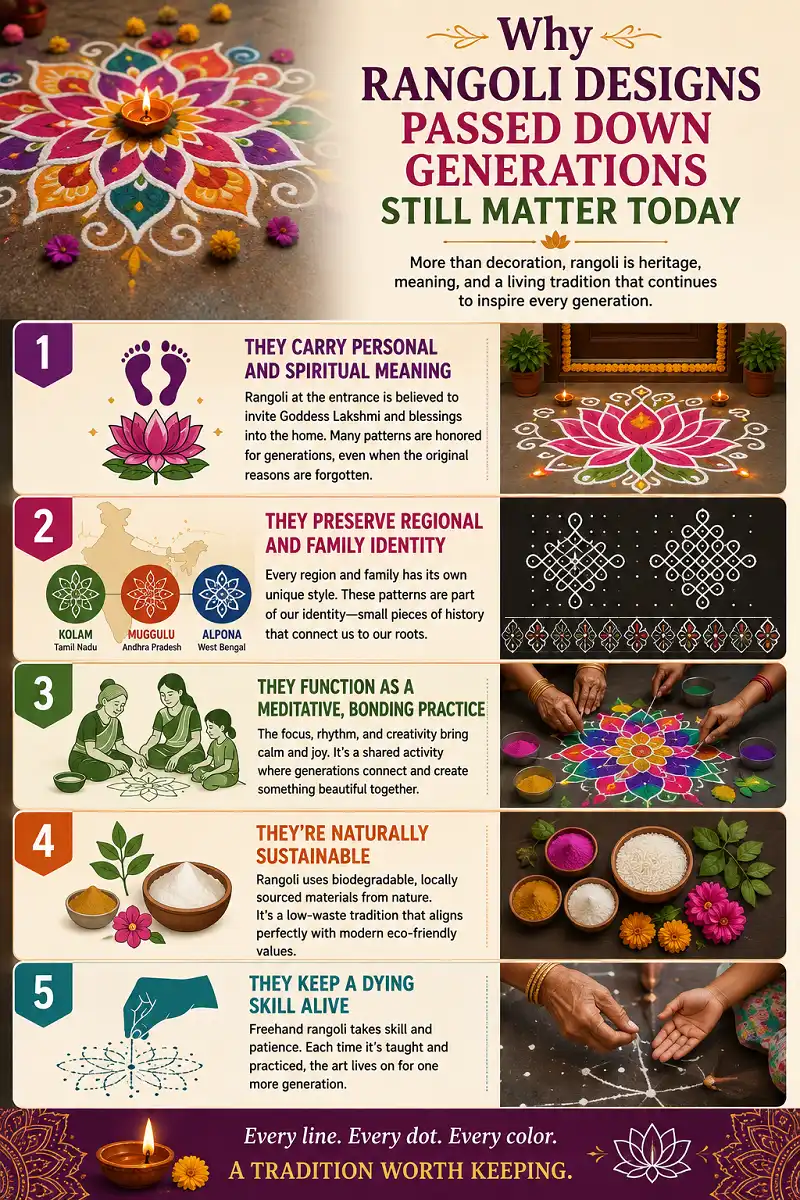
Many families believe that drawing rangoli at the entrance welcomes Goddess Lakshmi, associated with wealth and prosperity. A lotus, Lakshmi footprints, or another family motif may carry meaning that has been respected for generations.
Regional and Family Identity
A Tamil kolam, Andhra muggulu, and Bengali alpona each have their own visual character. Families may also develop their own signature border, color combination, or dot count.
A Meditative Bonding Practice
The repetitive movement, concentration, and focus on symmetry can make rangoli a calming activity. Grandparents, parents, and children can work on the same design together.
Naturally Sustainable
Traditional rangoli often uses biodegradable materials such as rice flour, turmeric, flower petals, and locally available natural materials.
Keeping a Skill Alive
Freehand rangoli requires practice. When an experienced artist teaches a younger family member how to control the powder and maintain symmetry, the skill receives another generation of life.
The Main Types of Rangoli You’ll Encounter
Rangoli has evolved beyond traditional powder-and-rice-flour patterns. If you are building your own family tradition, these styles are useful starting points.
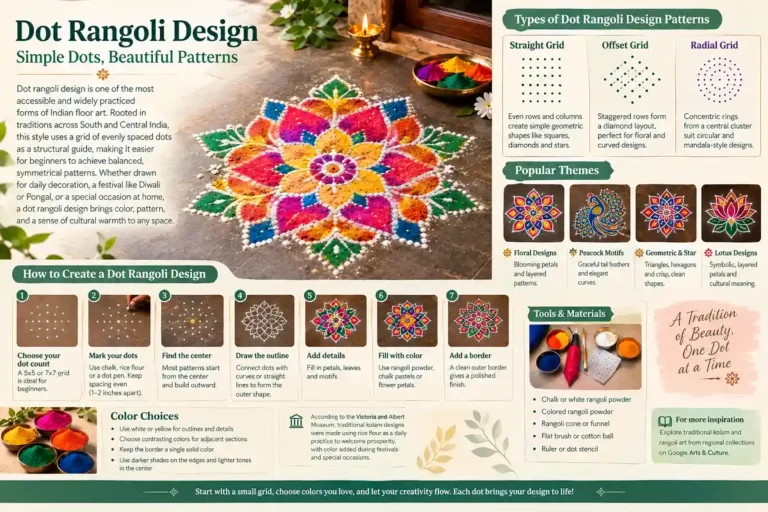
Dotted Kolam
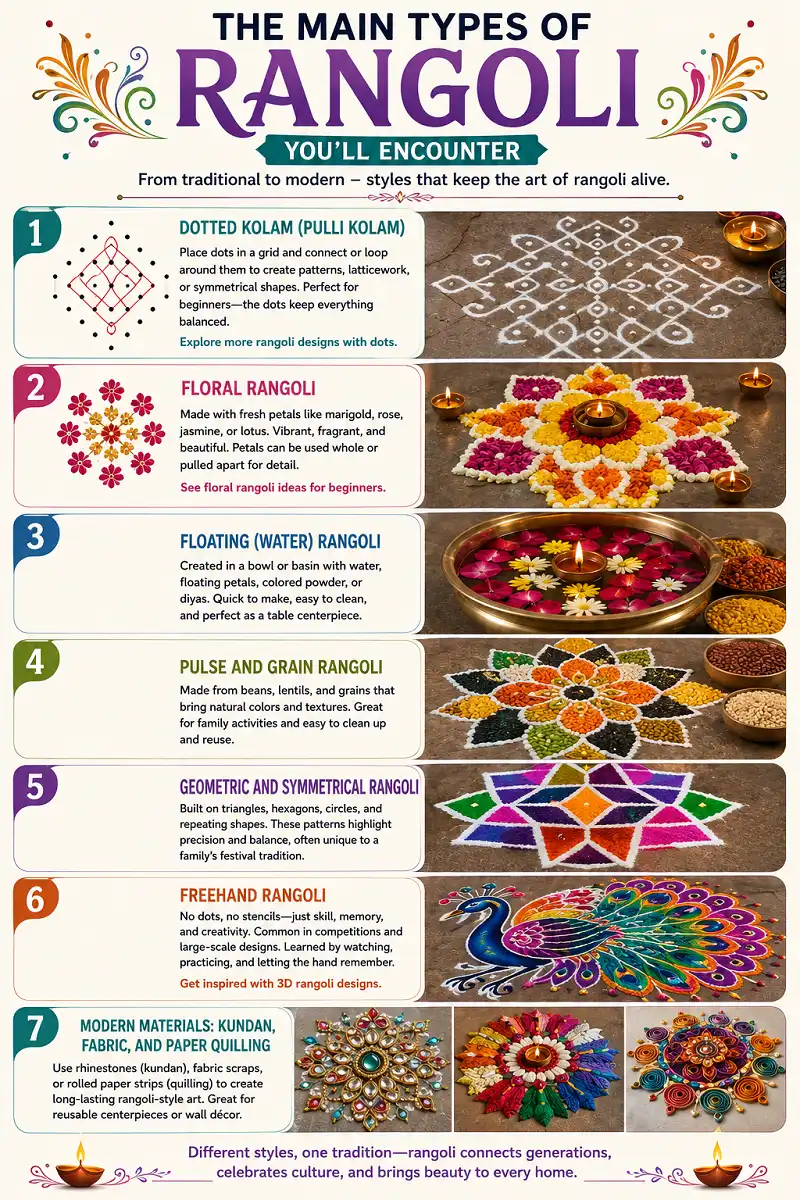
Also known as pulli kolam, this style begins with dots arranged in a grid. Lines and loops are then drawn around them to create balanced, symmetrical patterns.
Floral Rangoli
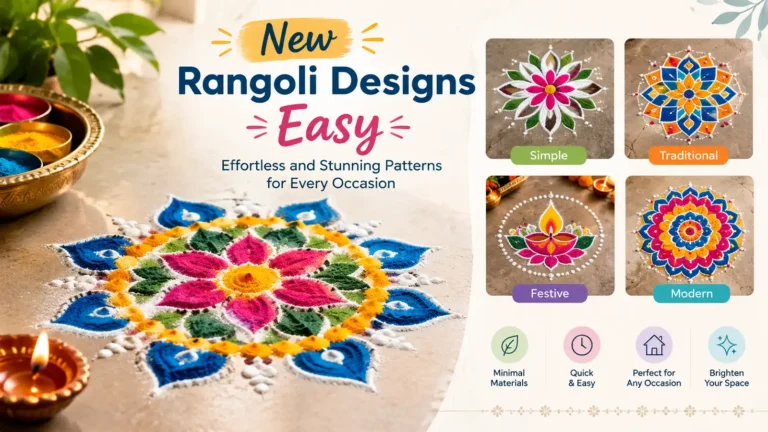
Fresh marigold, rose, jasmine, and lotus petals can be arranged into colorful patterns. Floral rangoli also pairs naturally with diyas during festivals.
Floating Water Rangoli
This variation uses a shallow bowl or basin of water decorated with floating petals, colored materials, or small diyas. It works especially well as a table centerpiece.
Pulse and Grain Rangoli
Dried beans, lentils, and grains create natural color variation. Larger grains can also make this style suitable for family activities involving children.
Geometric and Symmetrical Rangoli
Triangles, circles, hexagons, and repeating shapes create a strong sense of balance. These designs can become especially meaningful when a particular layout belongs to one family.
Freehand Rangoli
Freehand rangoli is created without a dot grid or stencil. Artists often work from memory, making this style particularly connected to hands-on teaching.
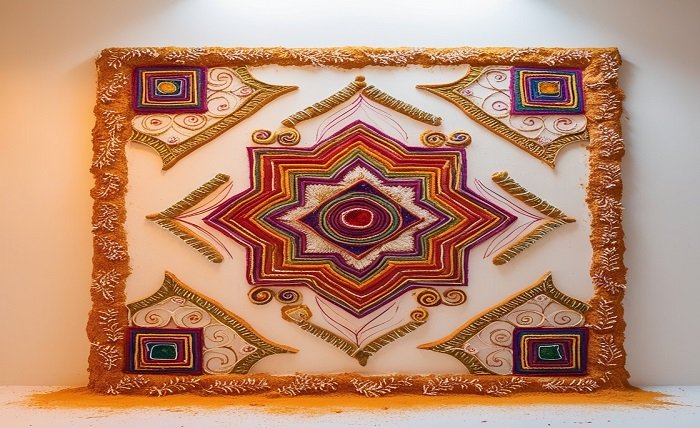
For more elaborate inspiration, explore 3D rangoli designs .
Kundan, Fabric and Paper Quilling
Modern rangoli-inspired designs may use rhinestones, fabric scraps, and paper quilling. These versions can last longer and work well for reusable centerpieces or wall décor.
Traditional vs. Modern Rangoli: A Quick Comparison
| Feature | Traditional Rangoli | Modern Rangoli |
|---|---|---|
| Materials | Rice flour, turmeric, natural powders, flowers | Synthetic colors, stencils, kundan, fabric, glitter |
| Technique | Freehand or dot-grid, often learned by watching family | Stencils, printed mats, and digital templates |
| Longevity | A few hours to a week | Weeks to months for some reusable versions |
| Meaning | Connected to family history and regional identity | Often primarily decorative |
| Best For | Preserving family rangoli traditions | Busy households wanting quick festive decoration |
Many families use both approaches — keeping a traditional freehand pattern for the main entrance while using a quicker stencil or reusable version for balconies, smaller spaces, or everyday decoration.
What matters most is that at least one version remains connected to the rangoli pattern the family actually recognizes as its own.
How to Start Your Own Family Rangoli Tradition
If you didn’t grow up learning a specific family design, that’s completely fine. Every family tradition had to begin somewhere.
Pick Your Materials
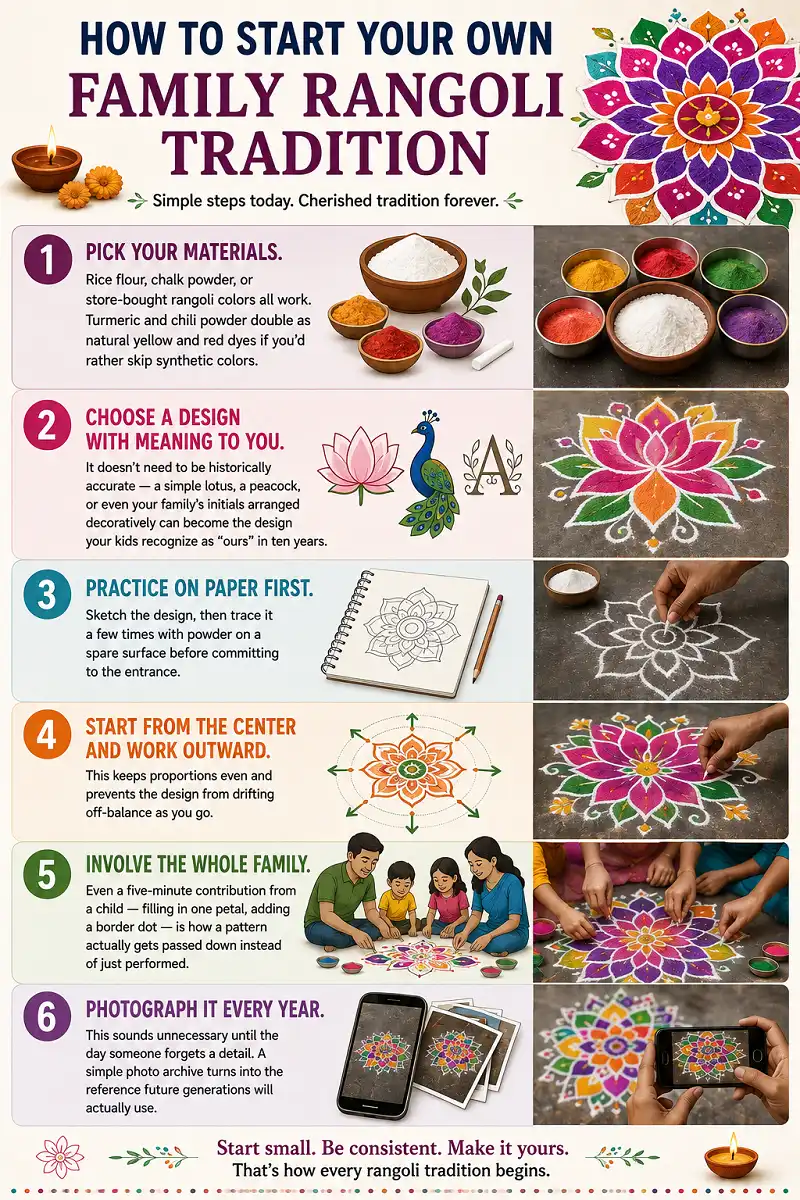
Rice flour, chalk powder, and store-bought rangoli colors can all work. Natural materials can also be used when appropriate.
Choose a Meaningful Design
Your design doesn’t have to be historically accurate. A lotus, peacock, simple geometric pattern, or another motif can become the pattern your family recognizes as its own.
Practice on Paper First
Sketch the design and practice tracing it with powder on a spare surface before creating the final version.
Start From the Center
Working from the center outward helps maintain proportions and makes it easier to keep the design balanced.
Involve the Whole Family
Let different family members contribute. One person can create the outline, another can fill color, and a child can add dots or a simple border.
Photograph It Every Year
A yearly photo archive can become a valuable reference when someone forgets a detail. Over time, those photographs become part of the family’s visual history.
For structured guidance, explore this step-by-step guide to traditional rangoli designs .
If kolam-style patterns interest you, you can also browse these rangoli and kolam design ideas .
Keeping Rangoli Traditions Alive Through Generations
Rangoli designs passed down generations survive because someone, every year, decides that the design is worth drawing again.
It’s not only the powder or the finished pattern that matters. The real tradition is the willingness to teach it, repeat it, adapt it, and remember it.
The design may change slightly from one generation to the next, but the act of teaching and repeating it keeps the tradition alive.
Don’t wait for perfection. Start the pattern.
If you’re beginning your own family version this year, keep it simple. The next generation can add its own colors, borders, and creative touches.
One day, they may be the ones explaining the meaning behind their family’s rangoli to someone even younger.
A rangoli can disappear from the floor in a few hours, but the knowledge of how to create it can remain for a lifetime.
That is what makes rangoli designs passed down generations so special: they connect artistic skill with family memory, cultural identity, and the simple act of creating something together.
Start with one pattern. Teach it to someone younger. Photograph it each year. Let the design evolve while keeping its story alive.
The tradition doesn’t have to begin with a masterpiece. It only has to begin.
FAQs About Rangoli Designs Passed Down Generations
Does the design have to stay exactly the same every year?
Not necessarily. Families can allow small changes such as a new color combination, an additional border, or a different flower motif while keeping the core pattern and meaning intact.
How many family members are usually involved in teaching rangoli?
It varies from family to family. Often, two or more generations work on the same design together, with an experienced family member guiding the layout while younger members help with colors, borders, or finishing details.
What if no one in my family remembers the original design?
You can start a new tradition intentionally. Choose a design that has meaning for your family and begin documenting it. The value of the tradition comes not only from the original pattern but also from teaching and repeating it over time.
Is it disrespectful to simplify a traditional design for beginners?
No. Starting with a simple dotted kolam or basic floral design can be a practical way to teach children and beginners. A simple design learned today can become the foundation for a more elaborate family pattern in the future.