Big Circle Rangoli Design Ideas for Every Festival
A big circle rangoli design is one of the most loved floor art forms in Indian culture. Its round shape carries deep meaning, symbolizing wholeness, unity, and positive energy. Whether you are preparing for Diwali, Pongal, Navratri, or any special occasion, a large circular rangoli can transform your entrance instantly.
These designs work beautifully in both simple and detailed styles, making them suitable for beginners and experienced artists alike.
This guide covers everything you need to know about creating stunning big circle rangoli designs with confidence.
Why Choose a Big Circle Rangoli Design?
The circular shape is a natural starting point for rangoli art. It gives your design a clear boundary, a strong center, and an organized layout that is easy to build on.
It suits all floor spaces, from small doorsteps to large courtyards.
The round frame makes it easier to keep proportions balanced.
It looks impressive even with a limited color palette.
It works with dry colors, flower petals, rice flour, and even chalk.
Types of Big Circle Rangoli Designs
Floral Circle Rangoli
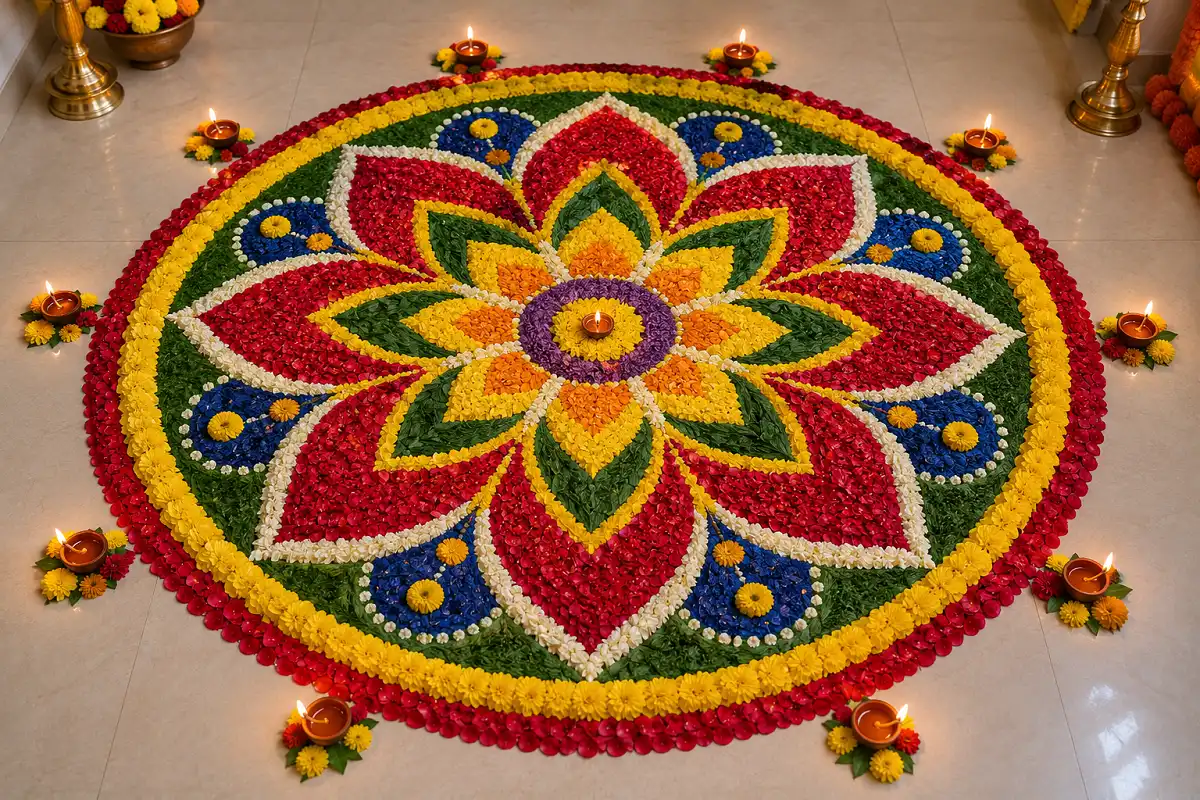
Floral patterns are the most popular choice for big circle rangoli designs. Petals are arranged in layers from the center outward, creating a blooming effect. You can use marigold shapes, lotus petals, or abstract curved leaves depending on your skill level.
For inspiration, check out these flower rangoli design simple ideas that can be scaled up into large circle formats easily.
Geometric Circle Rangoli
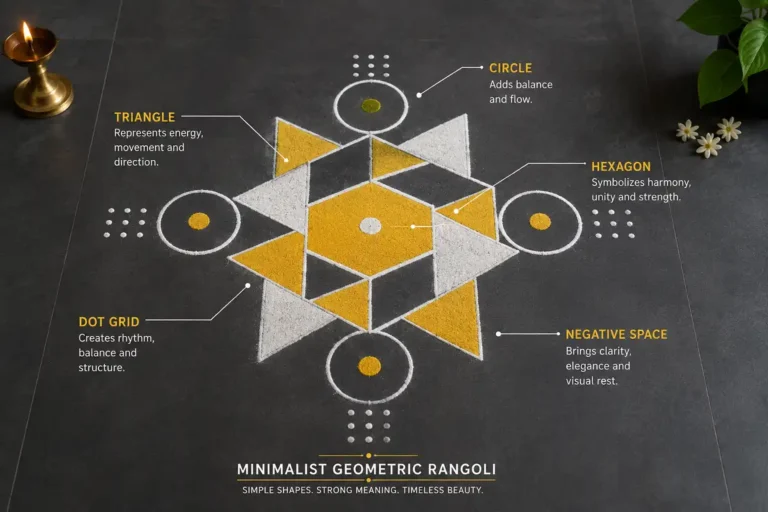
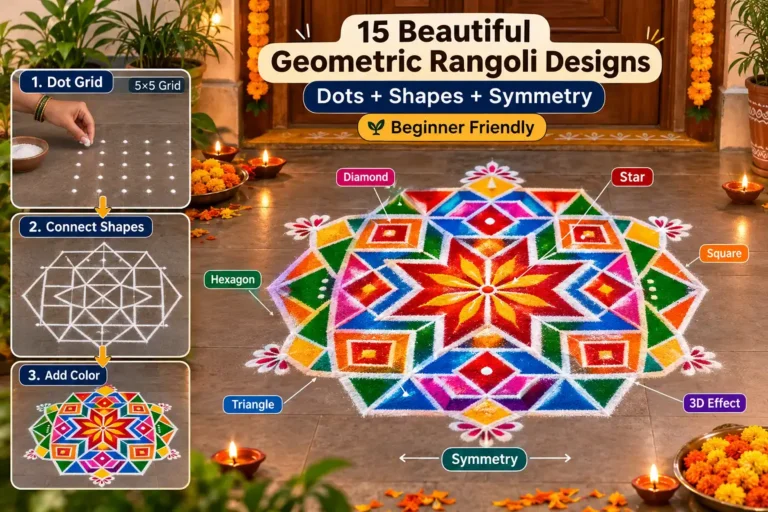
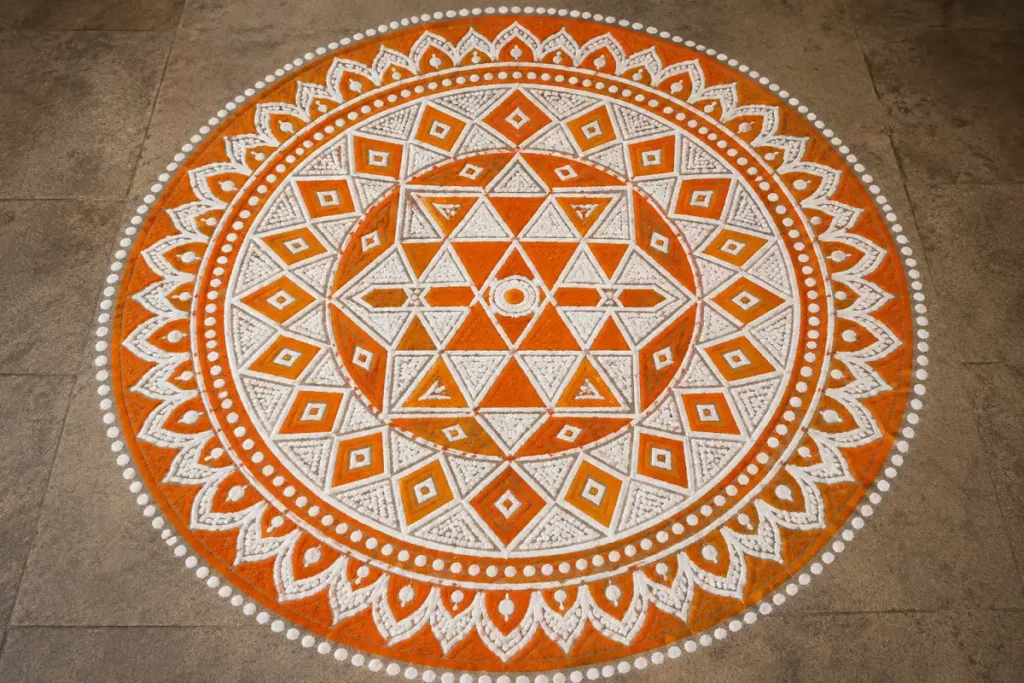
Geometric designs use triangles, diamonds, hexagons, and straight lines arranged in a circular format. These patterns have a bold, modern look while still respecting traditional forms. They are especially popular in South India during Pongal and Ugadi.
According to the Indian Council for Cultural Relations , rangoli is recognized as a living cultural tradition practiced across different states with distinct regional styles, making geometric forms particularly significant in many communities.
Peacock Circle Rangoli
A peacock placed at the center or along the border of a big circle rangoli adds elegance and depth. The feathers naturally fan out in a circular motion, making the bird an ideal motif for this shape. Browse some beautiful peacock rangoli design ideas to see how they work inside a large round frame.
Dot-Based Circle Rangoli
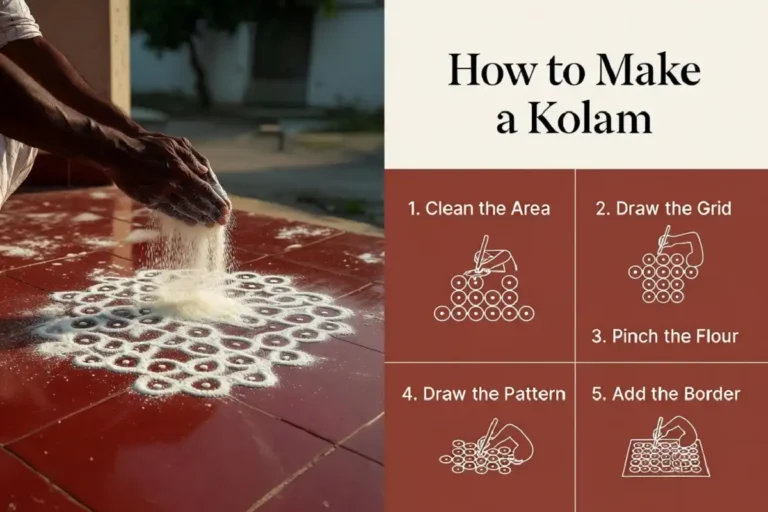
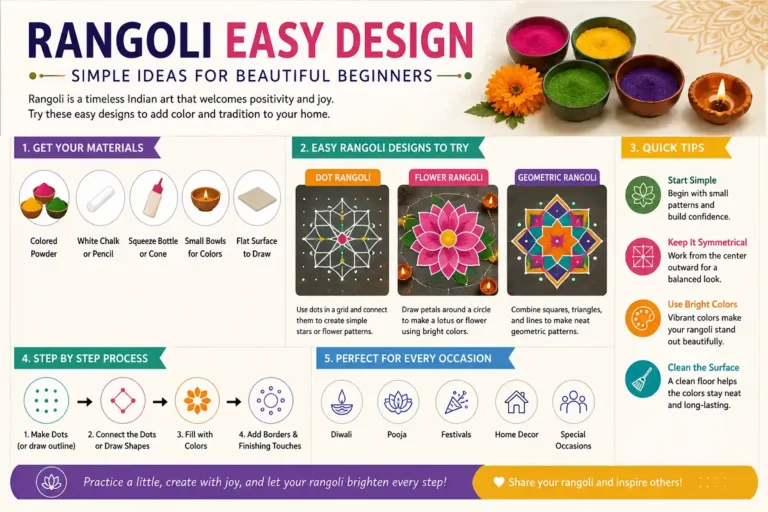
Dot rangoli, known as Kolam in South India, starts from a grid of dots and uses curved lines to connect them. When scaled up, a dot-based big circle rangoli design becomes an impressive central piece for any celebration.
Freehand Circle Rangoli
Freehand designs offer the most creative freedom. Artists draw the outer circle first, then fill the space with patterns that come naturally. This approach suits those who are comfortable with proportion and symmetry.
Big Circle Rangoli for Diwali
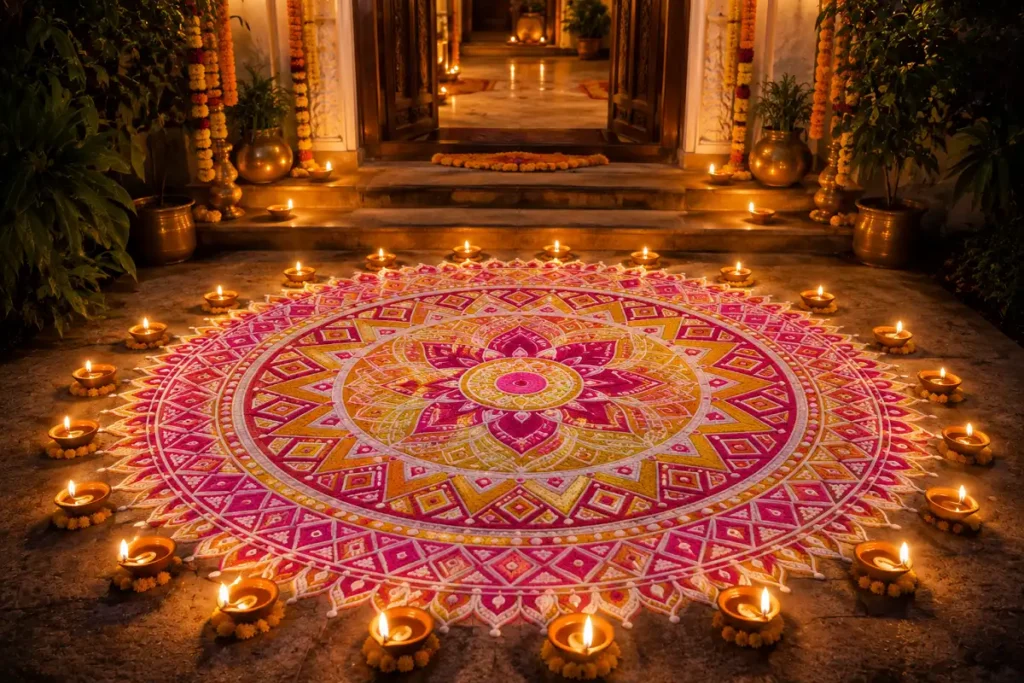
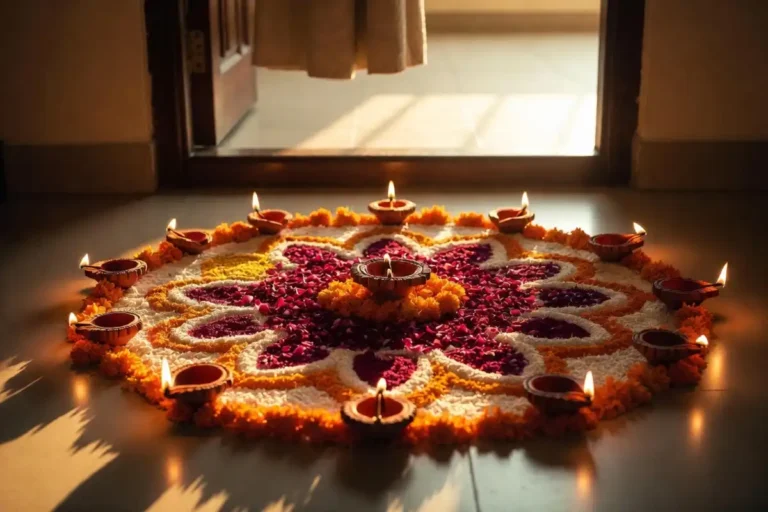
Diwali is the most popular time to create a big circle rangoli design. The bright colors, diyas placed along the outer ring, and symmetrical patterns all reflect the spirit of the festival perfectly.
Some popular choices for Diwali rangoli designs include lotus patterns at the center, surrounded by multiple color rings, with a row of small diya motifs around the outer edge.
For a complete look, pair your big circle rangoli with a beautiful border rangoli design around the edges of your entrance area.
Materials You Need to Make a Big Circle Rangoli
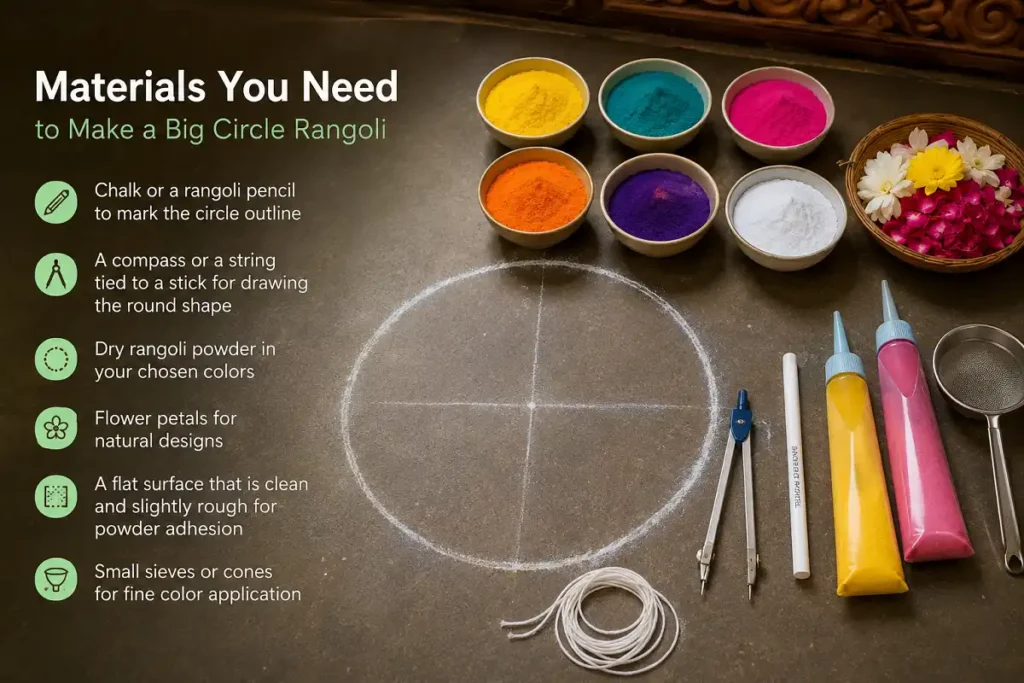
Before you begin, gathering the right materials makes the process smoother. Here is a quick list:
Chalk or a rangoli pencil to mark the circle outline
A compass or a string tied to a stick for drawing the round shape
Dry rangoli powder in your chosen colors
Flower petals for natural designs
A flat surface that is clean and slightly rough for powder adhesion
Small sieves or cones for fine color application
Tips for Drawing a Big Circle Rangoli
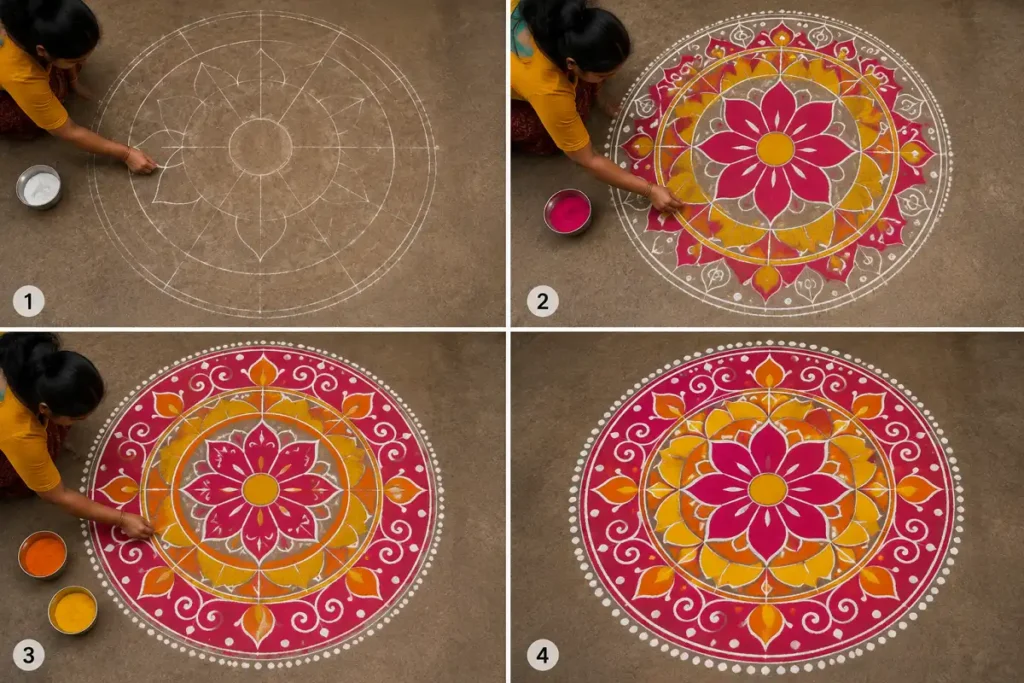
Creating a large rangoli requires some planning. These practical tips will help you get a clean and confident result.
Start with the Right Tools
Use a string compass to draw your outer circle. Tie one end of a string to a chalk piece and hold the other end at the center point. Pull the string taut and rotate it to draw a perfect circle of any size.
Work from Center Outward
Always begin filling your design from the center and move outward. This prevents smudging and keeps the inner details sharp while you work on the outer layers.
Choose a Limited Color Palette
More colors do not always mean a better design. Three to five colors that complement each other create a cleaner and more polished look than using every color available.
Outline Before Filling
Use white rangoli powder to outline all sections of your design before adding other colors. This acts like a border and keeps different color zones from bleeding into each other.
Practice on Paper First
Sketching your big circle rangoli design on paper before drawing on the floor helps you visualize the final result. This is especially useful for complex geometric or peacock designs.
You can find more practical approaches in this collection of simple rangoli design ideas that also include scaling tips.
Big Circle Rangoli Beyond Diwali
A big circle rangoli is not limited to Diwali. This design style fits seamlessly into many celebrations throughout the year.
Use nine colors to represent the nine forms of Devi.
Rice flour Kolam in large circles honors the harvest.
Floral circle rangoli at the entrance welcomes guests.
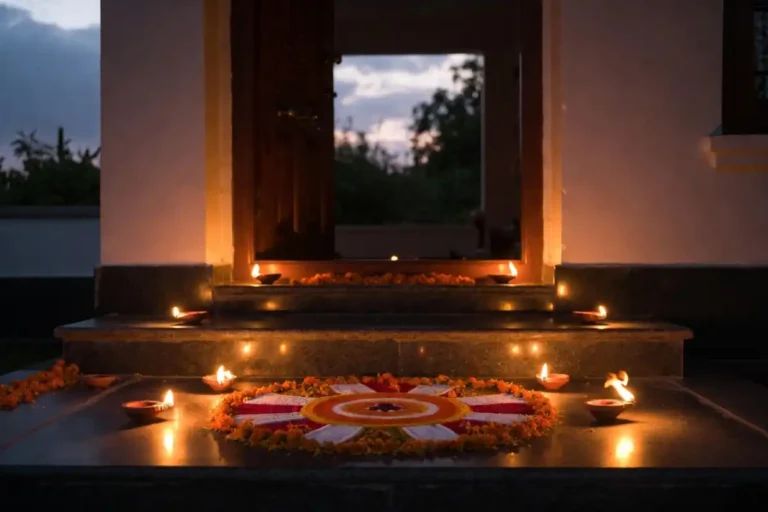
Flower-only Pookalam designs are essentially large circle rangoli made entirely from petals.
A traditional rangoli at the main door brings blessings. See these Dhanteras rangoli design ideas for circle-compatible patterns.
The Victoria and Albert Museum’s collection of Indian folk art highlights how floor art traditions like rangoli have been adapted across celebrations, seasons, and communities for centuries, showing just how enduring this art form truly is.
How to Add a Border to Your Big Circle Rangoli
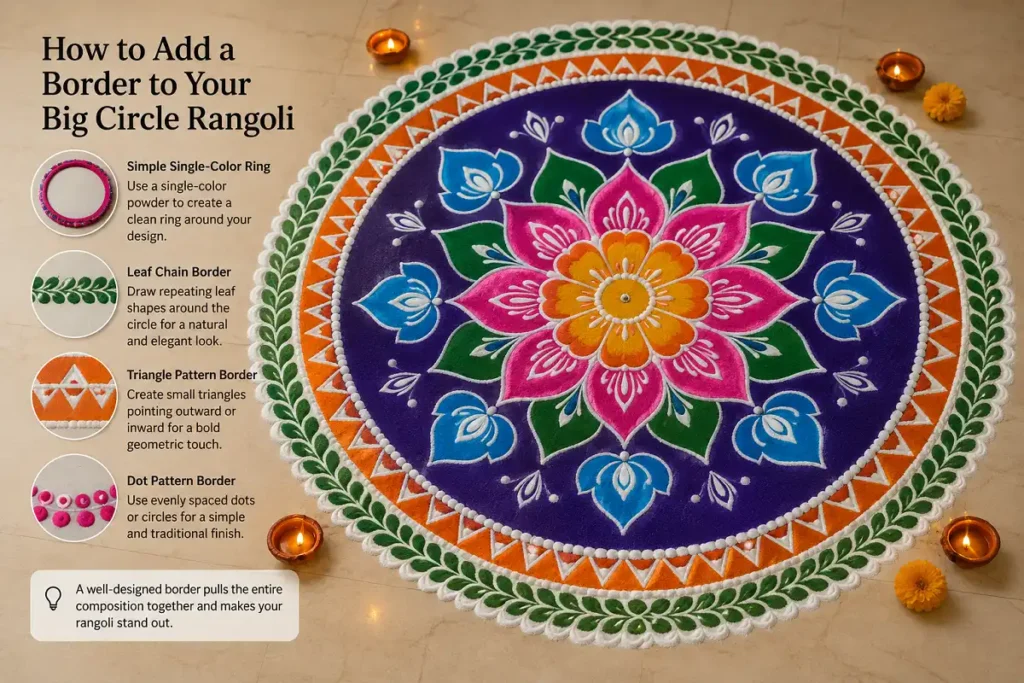
A well-designed border pulls the entire composition together. You can add a simple single-color ring around your design, or use a patterned strip with repeating motifs. Leaf chains, small triangles, and dot patterns are all common border choices.
If you want to expand the look of your rangoli beyond the central circle, consider adding a decorative outer frame. These rangoli border design ideas for every festival offer patterns that pair naturally with a large circular centerpiece.
Preserving Your Big Circle Rangoli Design
Rangoli is traditionally temporary, but if you want it to last through the day or a multi-day celebration, there are a few steps that help.
Apply the powder in thin, even layers rather than piling it up.
Avoid walking close to the edges once the design is complete.
Use fixative spray lightly over dry powder designs if you need them to last longer.
For outdoor designs, covering with a thin sheet overnight protects them from wind.
Big Circle Rangoli for Every Celebration
A big circle rangoli design brings color, tradition, and warmth to any celebration. Whether you prefer geometric precision, flowing floral patterns, or nature-inspired motifs, the circular frame gives you a strong foundation to build on.
Start simple, practice the basic steps, and add more detail as your confidence grows.
Frequently Asked Questions
What is the best size for a big circle rangoli design? +
A diameter of three to five feet works well for most home entrances and gives enough space to include detailed patterns without overcrowding the design. For courtyards or halls, you can go larger depending on the available space.
Can beginners make a big circle rangoli? +
Yes, beginners can make a beautiful big circle rangoli by starting with a simple two-ring design using two or three colors. Using a stencil for the outer circle and a basic petal pattern inside makes it very approachable for first-timers.
Which colors are traditional for a big circle rangoli design? +
Red, orange, yellow, white, and green are the most traditional choices. These colors appear frequently in classical Indian rangoli because they are associated with prosperity, purity, and celebration.
How long does it take to make a big circle rangoli? +
A simple big circle rangoli with two to three layers can take about 30 to 60 minutes. A detailed design with multiple colors and intricate inner patterns may take two to three hours depending on the artist’s experience.
Can I use flower petals instead of powder for a big circle rangoli? +
Yes, flower petals work wonderfully for a big circle rangoli. Marigold petals, rose petals, and leaves create a rich, textured look. This style is especially common during Onam and at wedding celebrations.
What is the significance of a circular shape in rangoli? +
The circle in rangoli represents completeness and the continuous cycle of life. It is also thought to contain positive energy within its boundary, which is why it is traditionally placed at entrances to welcome guests and blessings.