Rangoli Border Design: Ideas for Every Festival
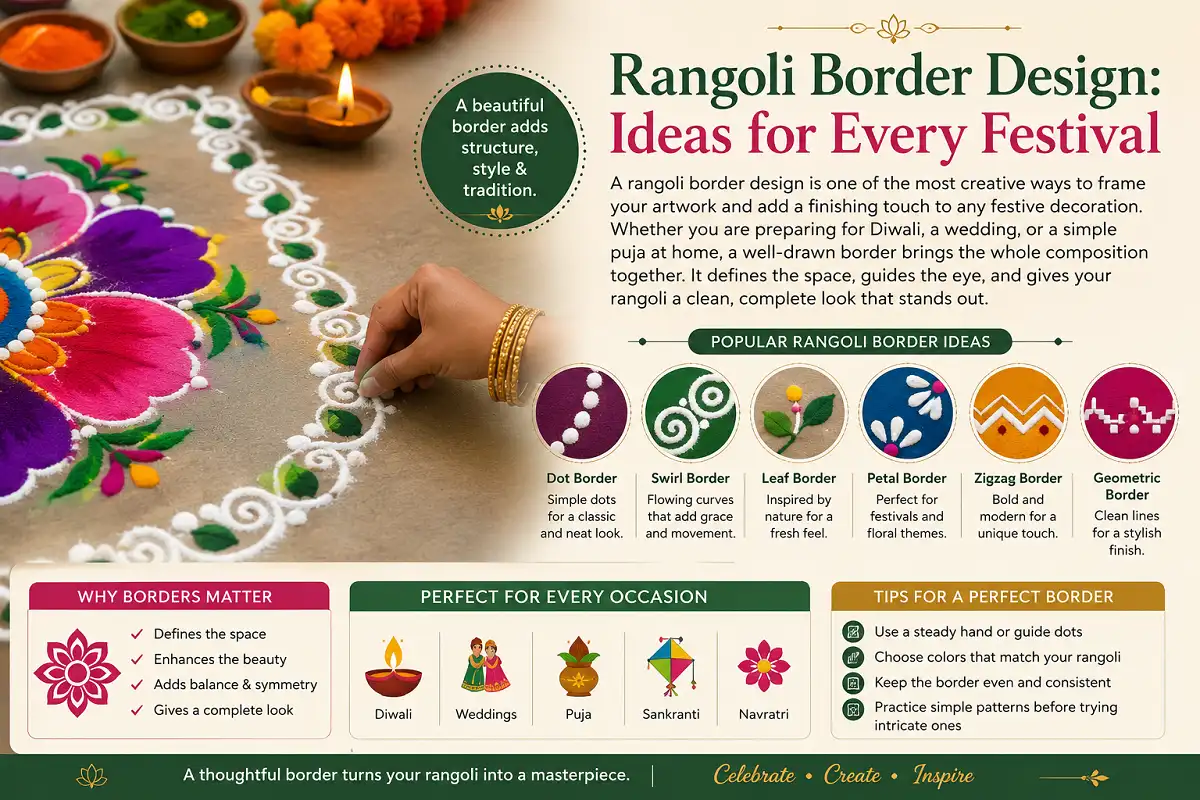
A rangoli border design is one of the most creative ways to frame your artwork and add a finishing touch to any festive decoration. Whether you are preparing for Diwali, a wedding, or a simple puja at home, a well-drawn border brings the whole composition together. It defines the space, guides the eye, and gives your rangoli a clean, complete look that stands out.
Why a Rangoli Border Design Matters
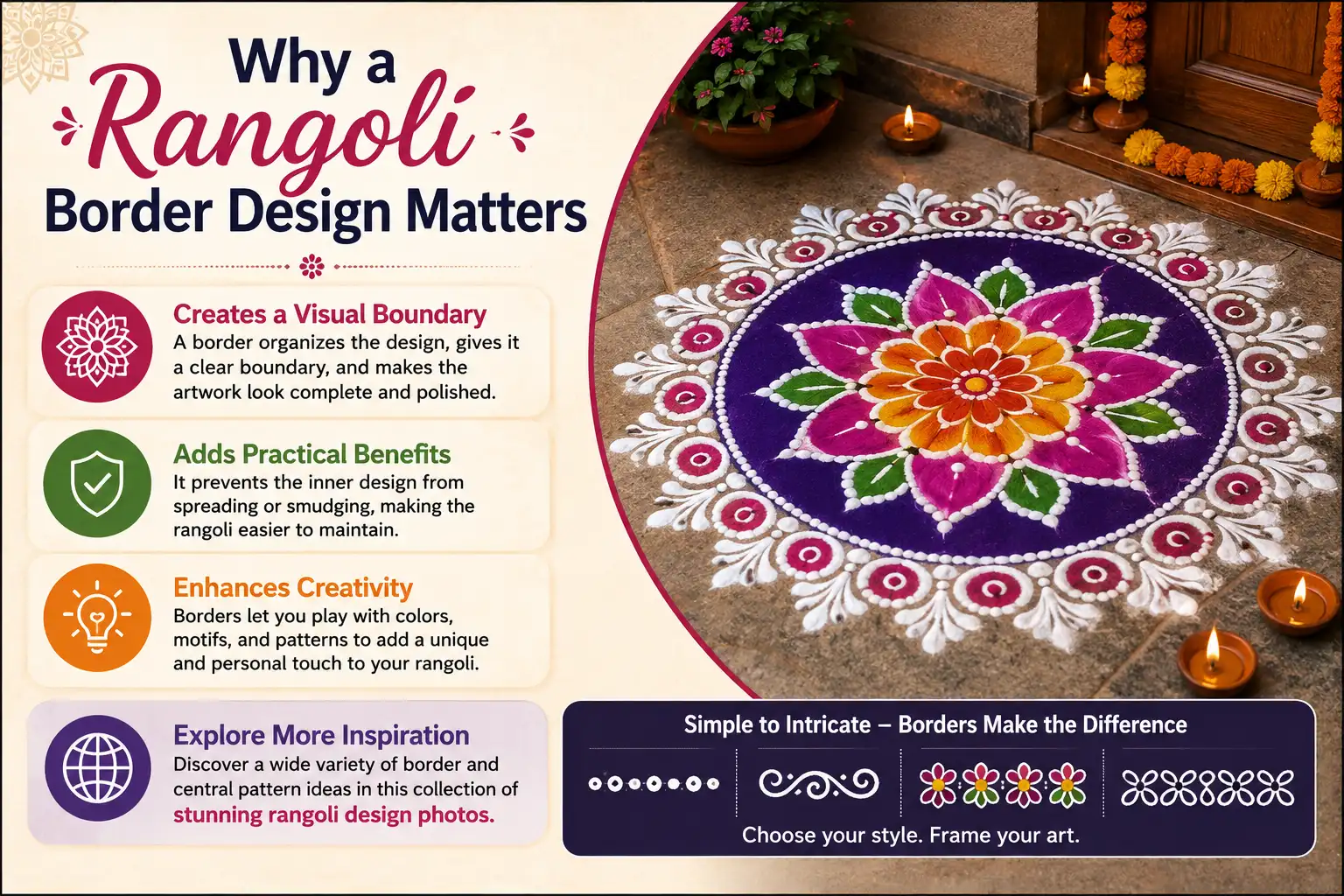
A border is not just a decorative edge. It acts as a visual boundary that organizes the entire design. Without one, even a detailed central pattern can look unfinished. A thoughtfully drawn rangoli border design holds everything together and makes the artwork look polished and intentional.
Borders also serve a practical purpose. They prevent the inner design from spreading or smudging, especially on outdoor surfaces. On entrances, courtyards, and pooja rooms, a clear border makes the rangoli easier to maintain throughout the day.
Beyond function, a border allows you to add extra creativity. You can use contrasting colors, intricate repeating motifs, or simple dot-and-line combinations to give your design a unique personality.
If you are looking for inspiration across a range of styles, this collection of stunning rangoli design photos offers a wide variety of border and central pattern ideas to explore.
Types of Rangoli Border Designs
There are several popular styles of rangoli border design, each suited to different occasions and skill levels.
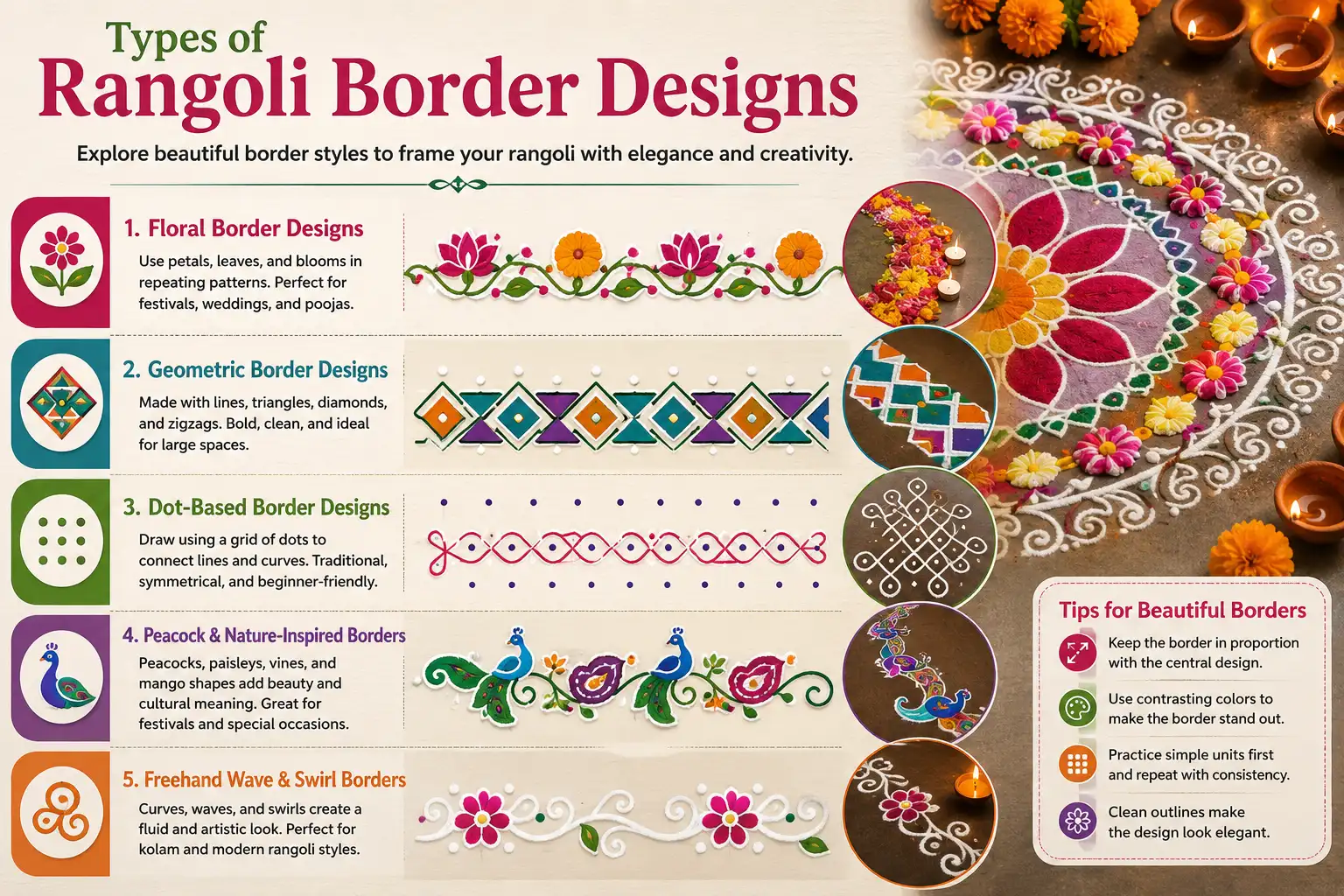
Floral Border Designs
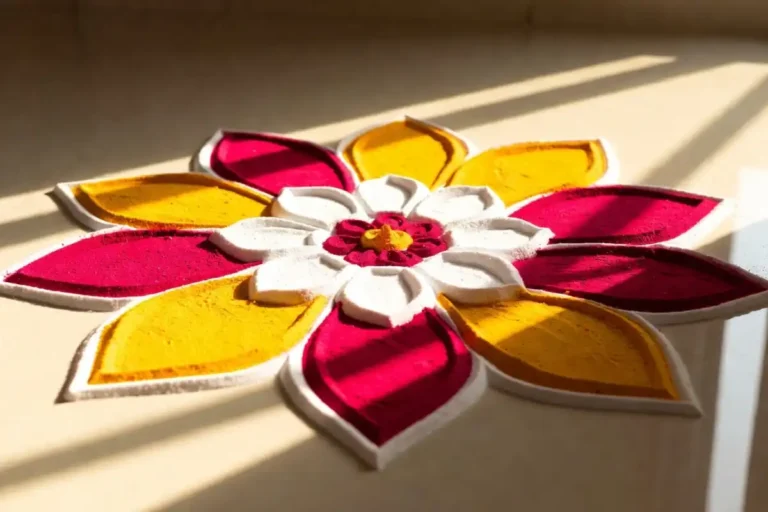
Floral borders are among the most loved styles in Indian homes. They use petals, leaves, and blooms arranged in a repeating pattern along the edge of the rangoli. You can draw small marigold shapes, lotus petals, or simple curved leaves. Floral borders pair well with both traditional and modern central designs.
These borders look especially beautiful when made with fresh flower petals during weddings and religious ceremonies.
Geometric Border Designs
Geometric borders use straight lines, triangles, diamonds, and zigzag patterns to create a structured edge. They are precise, bold, and particularly effective when you want a clean and modern look. These are ideal for large floor spaces like halls or courtyards.
Geometric borders are also easier for beginners because they follow a predictable repeating pattern. Once you master one unit, you simply repeat it around the perimeter.
Dot-Based Border Designs
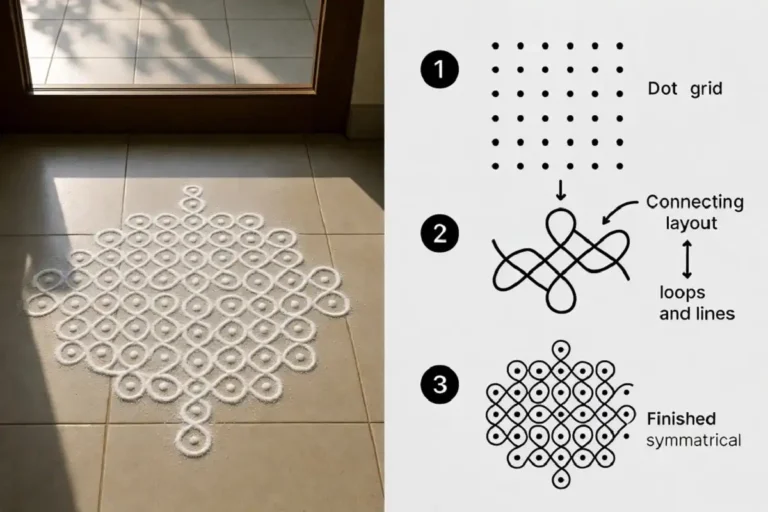
Dot-based borders use a grid of dots as a guide to draw the connecting lines and curves. This traditional approach, popular in South Indian rangoli traditions, produces beautifully symmetrical patterns without freehand drawing. It is one of the most effective methods for maintaining consistency across the border.
For those starting out, a simple rangoli design approach using dots is a great place to build confidence before attempting more complex border styles.
Peacock and Nature-Inspired Borders
Peacock motifs, mango shapes (the classic paisley), and vine patterns make for some of the most striking border designs. These are rooted in traditional Indian art and carry cultural significance. A peacock border, for instance, is a common choice during festivals and weddings.
If you enjoy detailed motifs, peacock rangoli design ideas offer excellent reference material for incorporating these elements into your border work.
Freehand Wave and Swirl Borders
Freehand borders with curves, waves, and swirls give rangoli a fluid, artistic feel. These do not follow a strict geometric grid and are more expressive in nature. They work beautifully for kolam-style rangoli and modern interpretations of traditional designs.
Rangoli Border Designs for Festivals
Festivals are the most common occasion for drawing rangoli, and the border design often reflects the theme of the celebration.
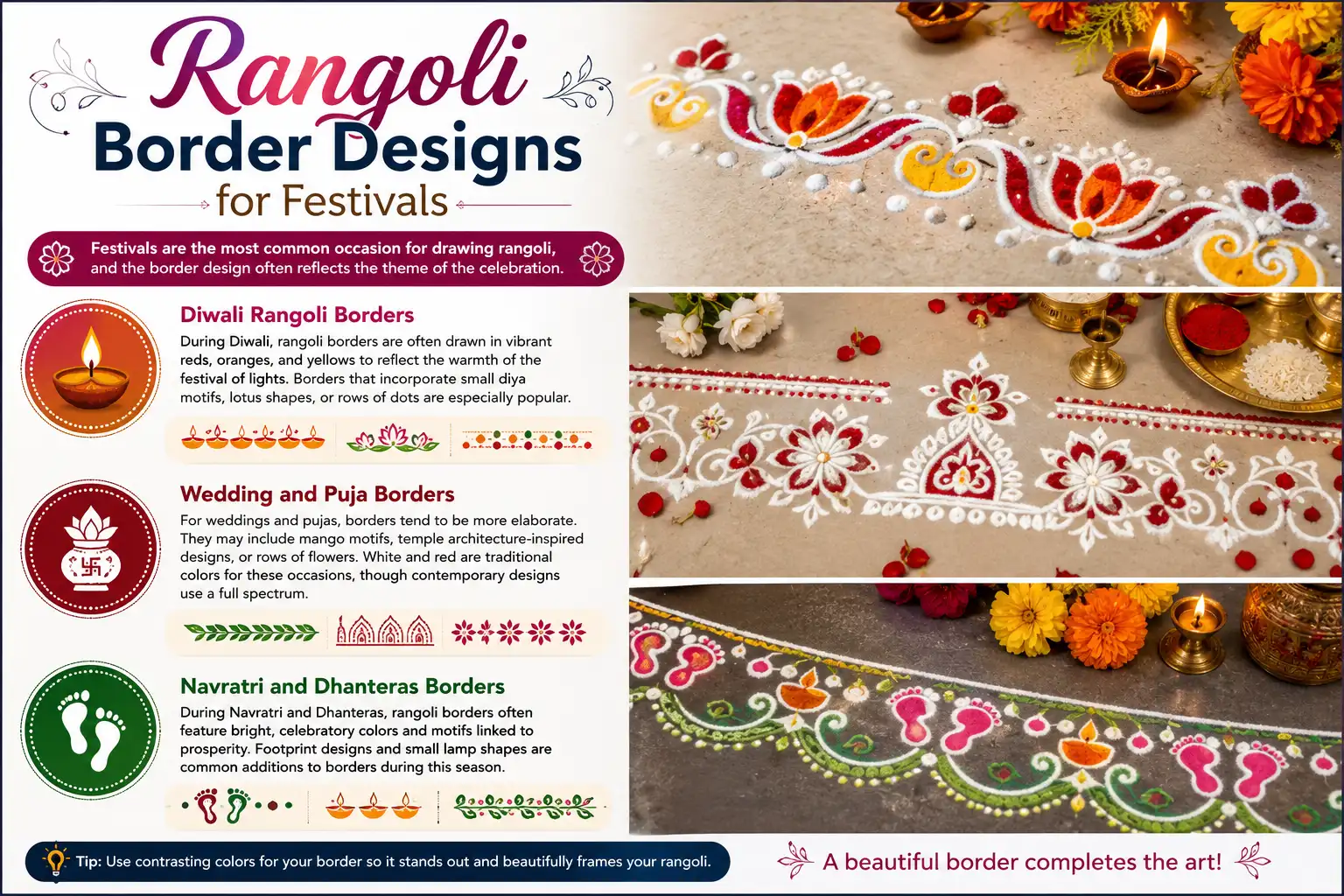
🪔Diwali Rangoli Borders
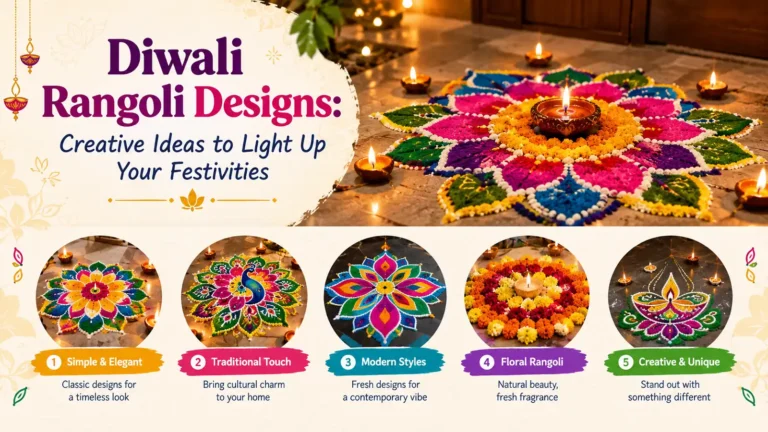
During Diwali, rangoli borders are often drawn in vibrant reds, oranges, and yellows to reflect the warmth of the festival of lights. Borders that incorporate small diya motifs, lotus shapes, or rows of dots are especially popular.
For a full set of ideas, this guide on easy and beautiful Diwali rangoli includes patterns that work beautifully with decorative borders. You can also explore a wider range of beautiful Diwali rangoli designs to find border styles that complement your main pattern.
💍Wedding and Puja Borders
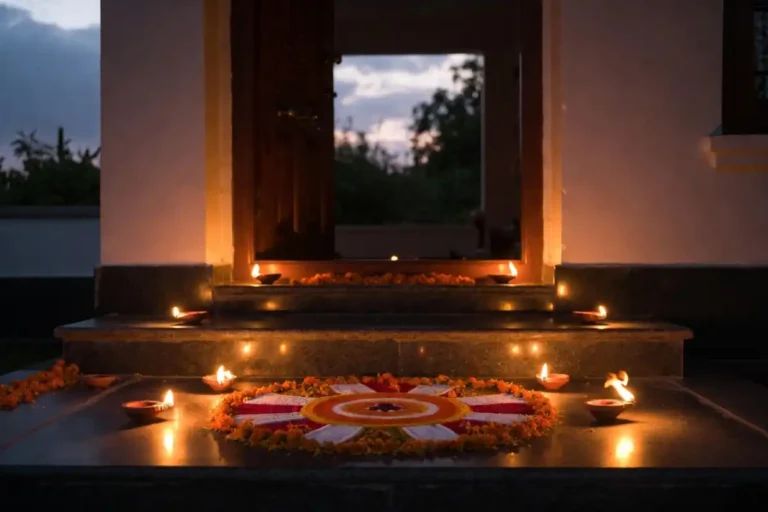
For weddings and pujas, borders tend to be more elaborate. They may include mango motifs, temple architecture-inspired designs, or rows of flowers. White and red are traditional colors for these occasions, though contemporary designs use a full spectrum.
🌾Navratri and Dhanteras Borders
During Navratri and Dhanteras, rangoli borders often feature bright, celebratory colors and motifs linked to prosperity. Footprint designs and small lamp shapes are common additions to borders during this season.
You can find festival-specific ideas in this collection of Dhanteras rangoli designs that include border inspiration.
How to Choose the Right Border for Your Rangoli
Choosing the right border depends on a few key factors:
Size of the Rangoli
Larger designs benefit from wider, more detailed borders. Smaller designs work better with a single-line or minimal border.
Skill Level
Beginners should start with dot-based or straight-line geometric borders. Experienced artists can experiment with freehand or intricate floral borders.
Occasion
Match the border style to the mood of the event. Festive occasions call for bright and bold borders, while daily puja rangoli can use simpler, understated styles.
Color Palette
The border color should either contrast with or complement the central design. Using one lighter or darker shade of your dominant color creates a harmonious frame.
Tips for Drawing a Perfect Rangoli Border
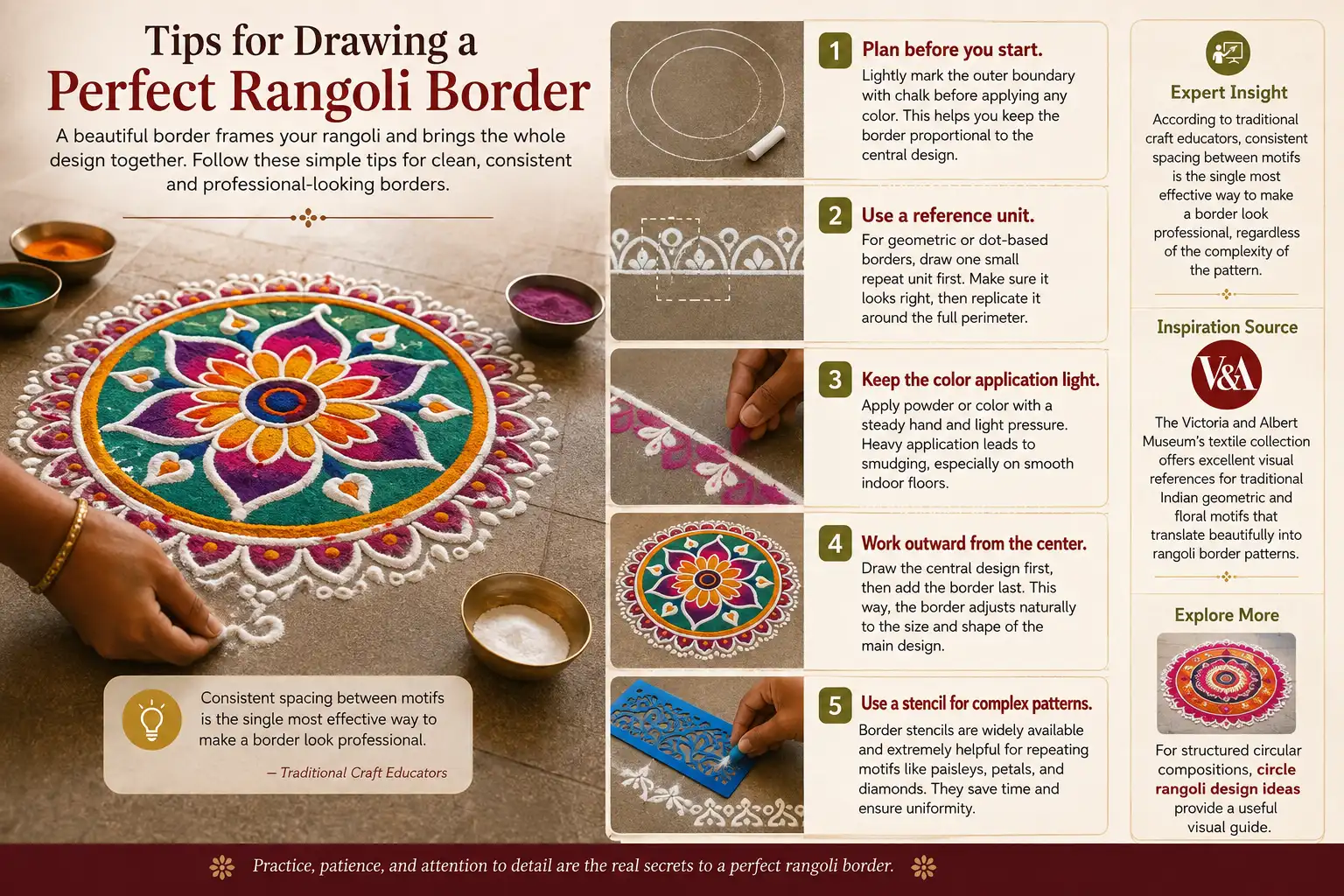
Drawing a clean and consistent border takes a little practice, but a few simple habits make a big difference.
Plan Before You Start
Lightly mark the outer boundary with chalk before applying any color. This helps you keep the border proportional to the central design.
Use a Reference Unit
For geometric or dot-based borders, draw one small repeat unit first. Make sure it looks right, then replicate it around the full perimeter.
Keep the Color Application Light
Apply powder or color with a steady hand and light pressure. Heavy application leads to smudging, especially on smooth indoor floors.
Work Outward from the Center
Draw the central design first, then add the border last. This way, the border adjusts naturally to the size and shape of the main design.
Use a Stencil for Complex Patterns
Border stencils are widely available and extremely helpful for repeating motifs like paisleys, petals, and diamonds. They save time and ensure uniformity.
For those who want to explore structured circular compositions that naturally call for a strong border frame, circle rangoli design ideas provide a useful visual guide.
Combining Border Designs with Different Rangoli Shapes
A well-matched border elevates the central composition regardless of its shape.
Square Rangoli
Angular geometric borders create a cohesive look. You can find layout ideas in this set of square rangoli design patterns that show how borders define and enhance the shape.
Flower-Based Rangoli
A flowing petal border maintains the organic, natural theme throughout. This resource on simple flower rangoli designs demonstrates how floral elements can be carried through from the center to the edge naturally.
Oval and Freeform Rangoli
Swirl or wave borders follow the contour of the shape and create a fluid, uninterrupted visual flow.
Common Mistakes to Avoid
Even experienced artists make a few recurring errors when drawing borders. Being aware of them helps you avoid them early.
- Uneven spacing between repeated motifs makes the border look rushed. Measure or estimate consistent gaps before you start.
- Using too many colors in the border can overwhelm the central design. Two or three border colors are usually enough.
- Drawing the border too close to the central design leaves no breathing room. A small gap between the main pattern and the border makes both elements stand out more clearly.
- Ignoring the floor texture can affect how powder sits. Rougher surfaces may require a slightly thicker application.
Frame Your Art with Confidence
A rangoli border design is the finishing touch that transforms a good rangoli into a great one. Whether you prefer floral curves, crisp geometric lines, or intricate peacock motifs, there is a border style that fits your skill level and the occasion. Start simple, practice consistency, and let your creativity guide the colors you choose.
Ready to create your next masterpiece? Browse our full collection of rangoli border design ideas for patterns you can try right away.
Whether it is for Diwali, a wedding, or everyday decoration, the right border makes every rangoli shine.
FAQs
What is a rangoli border design?
A rangoli border design is a decorative frame drawn around the outer edge of a rangoli to give it structure, define its shape, and add visual depth to the overall pattern. It can be geometric, floral, or freehand in style.
Which rangoli border design is easiest for beginners?
Dot-based and straight-line geometric borders are the easiest for beginners because they rely on a repeating unit and do not require advanced freehand skills. Starting with simple zigzag or diamond patterns builds confidence quickly.
Can I use a stencil for rangoli border designs?
Yes, stencils are a practical tool for drawing consistent border patterns, especially for repeating motifs like flowers, leaves, and geometric shapes. They are particularly useful for larger rangoli on entrance areas or courtyards.
What colors work best for rangoli borders?
Contrasting colors tend to work best, such as white borders on dark central designs or bright orange on a green and yellow composition. The key is to choose a color that makes the border visible without competing with the central design.
How wide should a rangoli border be?
The width of the border should be proportional to the size of the rangoli. For a large floor design, a border of two to four inches wide looks balanced. For a smaller design, a single line or a very narrow motif strip is more appropriate.